Category: Birding-Aus

  • Birdpedia – Australia – Weekly Digest

    The following is a digest of Sightings Reported on Birdpedia for the period Monday, January 13, 2020 to Sunday, January 19, 2020:

    Area: SA

    Location: At Rockleigh

    Varied Sittella (Daphoenositta chrysoptera) (6) We saw sittellas irregularly, but every few months, till the Jan 2014 bushfire, then once in the next March. Then they vanished. Given that the recent fires to the west of us burnt a very large area, maybe the birds are on the move looking for new habitat.

    White-plumed Honeyeater (Lichenostomus penicillatus) (2) We have not seen these for 5 years, and wonder if they are on the move too. They like water somewhere nearby, but no luck on our place. Our waterholes are dry, Long Gully Creek is dry, and even our neighbour’s small dam is dry. The white-plumes were with a group of New Holland honeyeaters feeding in a profusely flowering blue gum in the creek line.

    Hooded Robin (Melanodryas cucullata) (1) We saw a pair of hooded robins for the first time back in December. Today there was only the female, but how good is that, seeing a robin again ? Perhaps they like our sparse vegetation.

    Rainbow Bee-eater (Merops ornatus) (2) The bee-eaters are still here. One had a large insect with long wings in its bill, a small dragonfly maybe.

    Reported by: Barbara and Peter Bansemer on Tuesday, January 14, 2020

    ———————————————

    Need more information about a sighting? Login and contact the poster directly.

    Receive sightings via email or SMS immediately they are posted.

    Not a member of Birdpedia? Membership is free and gives you access to information for over 230 countries.

    To sign up go to the Birdpedia Web Site (www.birdpedia.com/).

    To find out more about Birdpedia and what it can do for you, see ‘What is Birdpedia?’

    ———————————————

    IMPORTANT NOTICE: This e-mail message is intended to be received only by persons entitled to receive the confidential information it may contain. E-mail messages to clients of Birdpedia may contain information that is confidential and legally privileged. Please do not read, copy, forward, or store this message unless you are an intended recipient of it. If you have received this message in error, please forward it to the sender and delete it completely from your computer system.


    Birding-Aus mailing list

    Birding-Aus@birding-aus.org

    To change settings or unsubscribe visit:

    birding-aus.org/mailman/listinfo/birding-aus_birding-aus.org
  • Birding-Aus Digest, Vol 75, Issue 10

    For the uninitiated, where is Bonna Point Reserve?

    Sent from my iPhone

    > On 12 Jan 2020, at 4:00 am, birding-aus-request@birding-aus.org wrote:
    >
    > Send Birding-Aus mailing list submissions to
    > birding-aus@birding-aus.org
    >
    > To subscribe or unsubscribe via the World Wide Web, visit
    > birding-aus.org/mailman/listinfo/birding-aus_birding-aus.org
    > or, via email, send a message with subject or body ‘help’ to
    > birding-aus-request@birding-aus.org
    >
    > You can reach the person managing the list at
    > birding-aus-owner@birding-aus.org
    >
    > When replying, please edit your Subject line so it is more specific
    > than “Re: Contents of Birding-Aus digest…”
    >
    >
    > Today’s Topics:
    >
    > 1. Kentish plover (suetaylor1)
    >
    >
    > ———————————————————————-
    >
    > Message: 1
    > Date: Sat, 11 Jan 2020 19:17:40 +1100
    > From: suetaylor1 < suetaylor1@bigpond.com>
    > To:
    birding-aus@birding-aus.org
    > Subject: [Birding-Aus] Kentish plover
    > Message-ID: < 5DF700DA09368DE2@smtp.telstra.com> (added by
    >
    postmaster@smtp.telstra.com)
    > Content-Type: text/plain; charset=”utf-8″
    >
    > Today I saw the Kentish Plover at Bonna point reserve at 2.15pm. Gps was -34.0075, 151.1881Sent from my Samsung Galaxy smartphone.g
    > ————– next part ————–
    > An HTML attachment was scrubbed…
    > URL:
    >
    > ——————————
    >
    > Subject: Digest Footer
    >
    > _______________________________________________
    > Birding-Aus mailing list
    > Birding-Aus@birding-aus.org
    > To change settings or unsubscribe visit:
    > birding-aus.org/mailman/listinfo/birding-aus_birding-aus.org
    >
    >
    > ——————————
    >
    > End of Birding-Aus Digest, Vol 75, Issue 10
    > *******************************************


    Birding-Aus mailing list

    Birding-Aus@birding-aus.org

    To change settings or unsubscribe visit:

    birding-aus.org/mailman/listinfo/birding-aus_birding-aus.org
  • Plague birds and army birds

    Plague birds and army birds
                                       As every autumn, also in 2019 Tromsø had an influx of Bohemian Waxwings in autumn, when the abundant Rowans (Mountain Ash, Sorbus aucuparia) have ripe berries. This year the harvest was not especially abundant, and the waxwings were gone again before New Year. (My 2020 year list is still stalled at 7 birds.) The English name Bohemian Waxwings does not signify that these birds come from Bohemia, now part of Czechia,
     but is rather an allusion to the tendency of the birds to rove over large areas, searching for the right berries. I do not know why ‘Bohemian’ in many European languages has become a synonym for a  certain way of life characterized by unstability, but it is definitely widespread in Europe; cf the opera ‘La Bohème’ in French, and the artist group ‘Christiania Bohemen’ in Norwegian.
                                    But in Dutch this waxwing, also there an irregular invader, is called the Pestvogel, literally the Plague Bird, and in older days the appearance of these birds was seen as a bad omen, and a warning that a plague was imminent. I know of only one other bird with a  vernacular name based on such folk beliefs, but I suspect there may be more, maybe as alternate and regional names, and I shall be very grateful for any info you might be able to give me in this matter.
                                  The other case I know, concerns the Norwegian name Hærfugl, literally ‘army bird’, which is the official Norwegian name for the Hoopoe Upupa epops. This bird, that in almost all other languages got an onomatopeic name, is of only irregular occurrence in Norway, but because of its striking appearance and its tameness it is always noticed by everybody when it is found. And just as the Waxwing in Holland, it was seen as a bad omen, in this case a warning of armies and war to come.
                                 Are there more such names?
                                Wim Vader, Tromsø, Norway

  • Kentish plover

    Today I saw the Kentish Plover at Bonna point reserve at 2.15pm. Gps was -34.0075, 151.1881
    Sent from my Samsung Galaxy smartphone.g
  • At Lake Burley Griffin

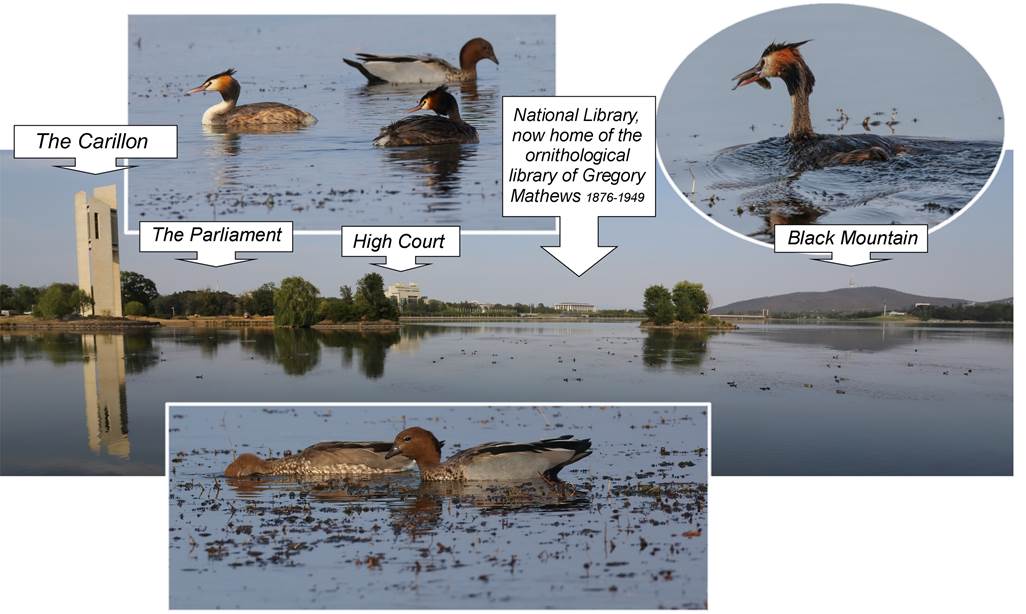
    There was a report yesterday of an unusual number of waterfowl on Lake Burley Griffin, so I had a look this morning. Remarkably, despite predictions, the air was the clearest it has been for about 3 weeks. One reason for the number of birds (several hundred) is that the lake is so low that the weed is easily accessible. This is particularly attractive to the Wood Duck, which usually graze on the green expanses of Canberra’s playing fields and golf courses. Not as many swans or pelicans as I’ve seen on other occasions (at coastal sites?).  Great Crested Grebe occasionally turn up here but although small the present numbers around Canberra are unusual (at least 3 on LBG).


    A screenshot of a cell phone

Description automatically generated


  • FW: Finished

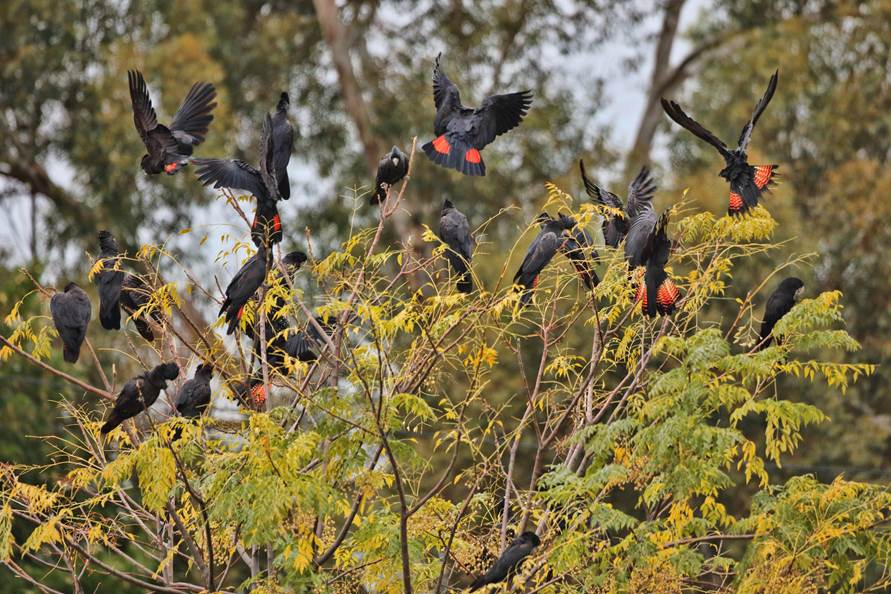
    I mentioned to Michael, but I’ll inflict this on all of you.  The White Cedar is a favoured food of the western NSW population of Red-tailed Black-Cockatoo.  I used to visit Bourke each winter just for the spectacle. If you left it too late there would not be a single fruiting W Cedar anywhere in town. The below tree is at the end of its useful stage for the season (18 June 2016)


    A group of men on a field

Description automatically generated


    —–Original Message—–
    From: Birding-Aus <birding-aus-bounces@birding-aus.org&gt; On Behalf Of Michael Hunter
    Sent: Tuesday, 7 January 2020 10:32 AM
    To: <birding-aus@birding-aus.org&gt; <birding-aus@birding-aus.org&gt;
    Subject: [Birding-Aus] Unfinished


    –effectively shaping the tree to be quite compact.

          Despite it being very ornamental, with light green leaves, having delightfully scented lilac flowers in spring, being covered in yellow or orange berries, and almost always with birds in it, White Cedars are a very high maintenance proposition. They are deciduous, shed twigs, dead leaves and berries for months, as noted, Currawongs regurgitate the berries into bird baths after digesting the outer flesh, but worst of all are the hairy processional caterpillars. White Cedar moths  lay eggs on the new spring foliage, when they hatch and grow the caterpillars I migrate down the trunk at night and hide under the bark or dirt, eventually thousands of them litter around the tree.  There is a simple solution, with apologies to any Caterpillar Rights activists reading this.  Ie, spray a 20 cm band of  residual insecticide around the trunk, the grubs touch it on their way down and expire.


           Otherwise  on the lookout for the fabled Currajong tree.


            Not religious but am hoping and praying that Global Warming will reverse.   Armageddon. 


               Michael


    Sent from my iPhone

    <HR>

    <BR> Birding-Aus mailing list

    <BR> Birding-Aus@birding-aus.org

    <BR> To change settings or unsubscribe visit:

    <BR> http://birding-aus.org/mailman/listinfo/birding-aus_birding-aus.org

    </HR>

  • Remembering Mallacoota

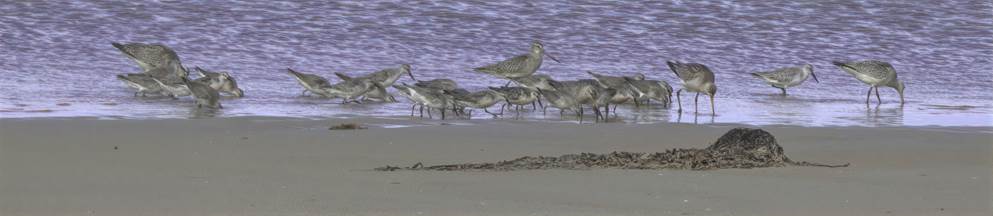
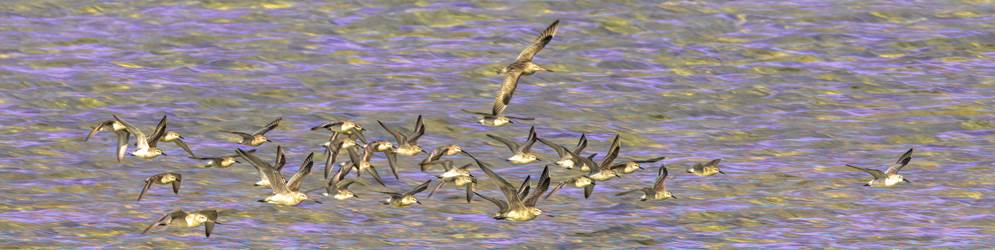
    It is yet another irony that this scenic and interesting place is now associated by most Australians only with the sad and dramatic events of recent days.  I made a short visit there last October driving back to Canberra from Melbourne.  Martin Butterfield had suggested as a vantage point for shorebirds a spot beside the vast waterside caravan/camping park.  Only distant views of the birds,  but it was a peaceful and satisfying scene looking over the sand flats towards the entrance.  The nearby camping spaces were closed while the amenities were being refurbished for the coming busy season.  I am sorry for all those people who have suffered as a result of the fires.


    The distant flock in the below snaps contains 3 species, the usual godwit and both knots.   The English Names Committee has recently considered names for the 3 Bar-tailed Godwit subspecies recorded for Australia.  The names chosen are taken from the names of localities used by each subspecies in the northern hemisphere.


    A close up of a bird

Description automatically generated


    A flock of seagulls standing on a beach

Description automatically generated


  • Unfinished

    –effectively shaping the tree to be quite compact.
    Despite it being very ornamental, with light green leaves, having delightfully scented lilac flowers in spring, being covered in yellow or orange berries, and almost always with birds in it, White Cedars are a very high maintenance proposition. They are deciduous, shed twigs, dead leaves and berries for months, as noted, Currawongs regurgitate the berries into bird baths
    after digesting the outer flesh, but worst of all are the hairy processional caterpillars. White Cedar moths lay eggs on the new spring foliage, when they hatch and grow the caterpillars I migrate down the trunk at night and hide under the bark or dirt, eventually thousands of them litter around the tree. There is a simple solution, with apologies to any Caterpillar Rights activists reading this. Ie, spray a 20 cm band of residual insecticide around the trunk, the grubs touch it on their way down and expire.

    Otherwise on the lookout for the fabled Currajong tree.

    Not religious but am hoping and praying that Global Warming will reverse. Armageddon.

    Michael

    Sent from my iPhone


    Birding-Aus mailing list

    Birding-Aus@birding-aus.org

    To change settings or unsubscribe visit:

    birding-aus.org/mailman/listinfo/birding-aus_birding-aus.org
  • Regurgitation

    White Cedars (Melia azedarach) are favourites of our local Currawong regurgitators, fouling every birdbath and fishpond in the garden Even water in house gutters, sprouting when they dry a sign that it’s time to clean th out.
    White Cedars (Persian lilacs), and we have one just outside the kitchen window, a spreading shady variety called Texas Umbrella tree, are very ornamental and a great tree for birds; various Cuckoos feed on the caterpillars, Black Cockatoos chew into the branches for Witchetty grubs, effectively pruning the

    Sent from my iPhone


    Birding-Aus mailing list

    Birding-Aus@birding-aus.org

    To change settings or unsubscribe visit:

    birding-aus.org/mailman/listinfo/birding-aus_birding-aus.org