To answer Pete’s question, in terms birding techniques from a car, I agree with Penny, cars do make good bird hides, and also with Peter and Chris about using some sort of hybrid-method (driving slowly and, when you hear activity, get out and walk). To add this I’ve found a good method for birding in the mallee is to stop every km or so i.e. far enough from your last stop to be considered a different site, and listen for unusual calls. In the Murray-Sunset (in appropriate habitat) this is a good way to find Red-lored Whistler, particularly on sunny windless Spring mornings.
In Africa much of the birding is done from a car in an open 4WD (on ‘Birdwatching Safari’). However, by contrast, anyone who gets out of the car gets eaten by a Lion or Hyenas, or some such thing. (I’m just being silly.)
A question that’s sometimes asked is “how many people have car accidents due to birding while driving?” I’ve certainly been in this situation several times (don’t tell anyone), and as a result I’ve got very good at identifying birds quickly, with a slight glance (a technique very useful in a Twitchathon). For instance I first identified the Regent Parrot I saw near Mildura from its silhouette cast on the ground while it flew over the car. (I’m just blowing my own trumpet now.) I’m sure many birders have had similar experiences.
I remember as a kid my father stopped in the middle of a road to look at a dead road-kill bird (I do the same thing). Mum, my two brothers, sister and I were all in the car. As my Dad identified the bird – “Yep, it’s a dead Barn Owl” – a car approached doing 100 km. It slammed on the breaks, did a complete 360, and then continued driving. When Dad got back into the car he said “What’s up?” My parents separated soon after that.
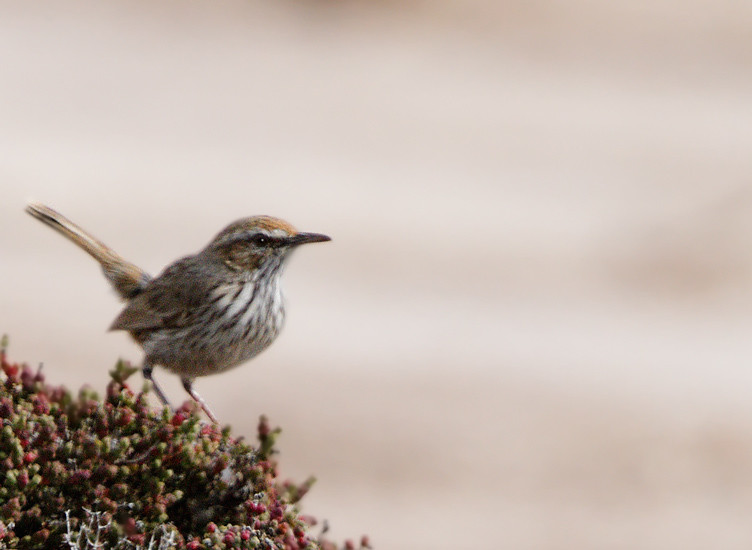
A couple of years ago I was leading a Birds Australia campout to the Victorian mallee and we were targeting Striated Grasswren (a new bird for most of the group). We weren’t having much luck; it was hot and windy. We’d moved from Hattah, across the Hwy to the Murray-Sunset, and then to the Triodia out the back of the Pink Lakes. We’d already got Red-lored Whistler – found when I’d stopped for a nature break. (I had to wait a minute before I could inform the other.) So we walked into the bush in search of the Grasswren. It’d been a long day, and a couple of birders decided to stay back at the car and drink beer. From memory it was Coopers Green, good beer to drink in the mallee. After a fruitless hour searching we returned to the car to find two semi-intoxicated birders (fortunately neither was driving) who said they’d just ticked Striated Grasswren from the back seat of the car. “What. You’re both drunk!” I said, clearly the correct thing to say under the circumstances. However sure enough, immediately beside the car was a couple of very confiding Striated Grasswren, so close that in order to photograph them you had to stand back.
Cheers,
Tim
________________________________________ From: Peter Shute [pshute@nuw.org.au] Sent: Monday, October 04, 2010 2:07 PM To: Tim Dolby; Jeremy Weiss; birding-aus@vicnet.net.au Subject: RE: [Birding-Aus] Mallee trip report
Tim, you describe two ways of finding flocks on foot. Have you got any opinion on the technique of driving till you find one?
I’ve recently returned from a trip to Little Desert, where I’ve never been birding before. I was a little dismayed to find that walking in some places got me just a few very quick glimpses of birds darting across tracks, no matter how long I did it for. I resorted to slow driving, and at least the birds lingered a little longer.
Peter Shute
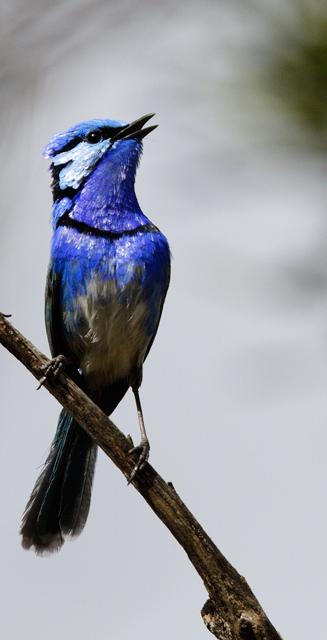
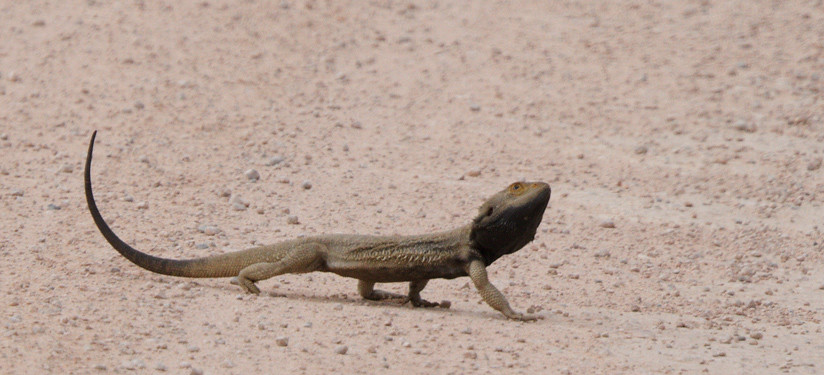
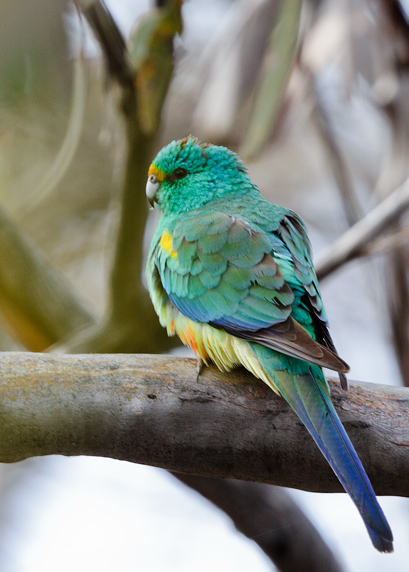
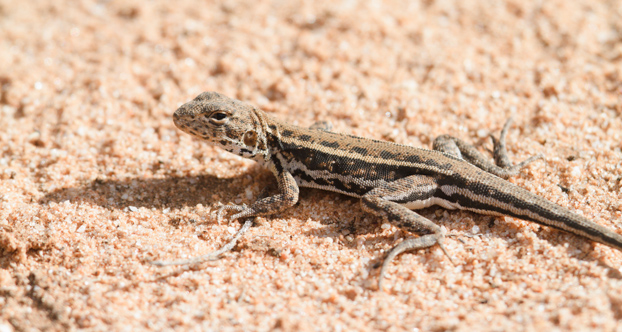
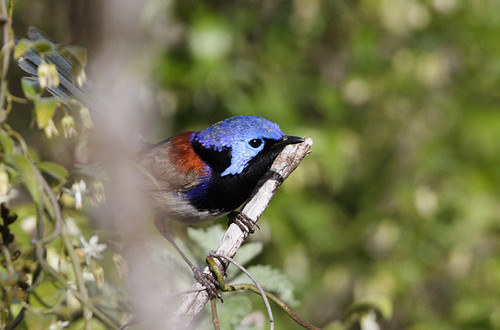
> —–Original Message—– > From: birding-aus-bounces@vicnet.net.au > [mailto:birding-aus-bounces@vicnet.net.au] On Behalf Of Tim Dolby > Sent: Monday, 4 October 2010 1:15 PM > To: Jeremy Weiss; birding-aus@vicnet.net.au > Subject: RE: [Birding-Aus] Mallee trip report > > Sounds like a really interesting trip Jeremy. I wouldn’t be > too concerned Jeremy about not seeing some of the rarer > species in the mallee, particularly those linked to Triodia. > I did a quick count and you saw 22 new species, not bad by > anyones calculations! Dipping on species such as Mallee > Emu-wren, Striated Grasswren and Malleefowl is not unusual at > the best of times – especially not first time around. For > example a bird tour guide recently missed them there at > Nowingi, stating that it was very quiet. > > When I was at Hattah and Wyperfeld last week the amount of > water in the area was amazing. Lake Hattah was literally > bursting its banks. This is probably one reason things are a > little quiet, especially around the Lake Hattah area. With > all the water around, bird such as Regent Parrot are no > longer reliant upon the lake for drinking, and therefore can > disperse more widely. For example last week I saw a Regent > Parrot flying over a winery near Mildura. > > Personally I find that a specific feature of Mallee birding > is behaviour known as mixed-species flocking, even amongst > some of the sedentary species such as Mallee Emu-wren and > Striated Grasswren. Mix-species flocking is were flocks of > usually insectivorous birds of different species join with > each other and move together while foraging. Mix-flocks moves > through the mallee at about 0.3 km an hour, with different > species foraging in their preferred niches (on the ground, on > trunks, in high or low foliage, and so on). Some species > follow the flock all day, while others – such as Grasswren > and Emu-wren, join it only as long as it crosses their own > territories. > > The key to seeing a range of species is to travel through the > area in hope of finding one of these flocks. Personally I > found there are two ways of doing this: > > – Walk slowly and listen very carefully for bird calls and > then follow it up straight away > > – Alternatively walk quickly, covering more territory, > stopping when ever you think you hear something. Note that > this is a good technique for seeing Grasswren and Emu-wren, > which tend to move away or hide when approaching. > > FYI I’ve place some information of finding the rarer species > of bird in the mallee on my report site. Hopefully it provide > some assistance next time you visit, see: > > http://tim-dolby.blogspot.com/search/label/Finding%20Rare%20an > d%20Uncommon%20Birds%20in%20Northern%20Victoria > > Once you get used to the mallee you’ll find that it is one of > the most rewarding birding habitats in Australia. The colour > of plants, soil and the birds – such as parrots, chats and > fairy-wren – adds to its beauty. As you say not seeing some > species simply gives you an excuse to go back. To be quite > honest I’m usually glad that I’ve dipped on not seeing some > birds for this very reason! > > Cheers, > > Tim Dolby > > > ________________________________________ > From: birding-aus-bounces@vicnet.net.au > [birding-aus-bounces@vicnet.net.au] on behalf of Jeremy Weiss > [enlightenedstave@gmail.com] > Sent: Saturday, October 02, 2010 11:33 AM > To: birding-aus@vicnet.net.au > Subject: [Birding-Aus] Mallee trip report > > Hello everyone, > > Thought I would give a report of my trip to the mallee. I > went from Monday September 27 to Friday Oct 1. > > First I should say upfront that I dipped on a lot of birds. > > I had the ‘Where to See Birds in Victoria’ book and was > expecting to find a lot more than I did. I’ve only been > birding for a year so I think this was just a problem of > technique, often I would enter a dry forest and just find it > completely silent and I wasn’t sure if driving along tracks > was better than going on foot. > > That said I had a great trip, still saw quite a few new birds > and the scenery was just incredible. > > So here it goes: > > > > Monday September 27 > > > > Set out from Melbourne early in the morning. Before the first > destination, Lake Tyrrell, we stopped to take pictures of the > amazing orange flowers that were popping up everywhere. I had > heard that Central Australia was getting a lot of flowers and > the Mallee didn’t disappoint in that regard. > > > http://farm5.static.flickr.com/4092/5041885994_b5bea4c40f_o.jpg > > > After that, the first interesting sighting on the way was a > Red-backed Kingfisher sitting on a power line in some town > (sorry, completely forgotten the name but it was a small town > on the Calder) > > I thought this was a good omen since I love kingfisher but > arriving in Lake Tyrrell midday it was completely dead. Very > windy and couldn’t find any birds other than a Singing > Honeyeater (new) > > > After that we went to check out Gama Reserve on the way to > Ouyen. Lots of activity here, mostly from a family of Brown > Treecreepers (new) that were making a ton of noise. Did see > the first Mulga Parrots (new) of the trip, some Spiny-cheeked > Honeyeaters, Singing Honeyeaters and caught a glimpse of a > male Variegated Fairy-wren (new.) > > > Next we headed for Bronzewing Flora and Fauna Reserve…at > least I hope that’s where we went. It was off Torneys Road > and had a dam with water in it. Anyway saw a pair of Southern > Whiteface (new,) a few Weebills as well as a beautiful male > Splendid Fairy-wren (new). Got very close to him but > unfortunately he was against an overcast sky. > > > http://farm5.static.flickr.com/4087/5042523381_3340e17420_o.jpg > > > Then it was off to Hattah-Kulkyne to set up camp. Saw this > lizard strutting across the road; maybe someone can help me > with an ID? > > > http://farm5.static.flickr.com/4103/5041886022_043419f5d7_b.jpg > > > Setting up the tent at the Lake Hattah campsite I saw my > first Apostlebirds > (new.) The novelty wore off quickly, let me tell you! > > That was the end of the first day since the afternoon was > spent setting up the tent and camping gear. > > > > > > Tuesday September 28 > > > > Tuesday morning we headed to the Nowingi track to look for > Mallee Emu-wrens. > This was a lot more difficult than I had originally thought. > First I had only brought track pants with me and walking > through the spinifex gave my legs a gentle stabbing every > time. Next, although I enjoyed roaming the spinifex clumps, > it was incredibly hard to find anything. Most of the sounds I > heard was just loose bark scraping against the trees in the > wind. Anyway didn’t see any Emu-wrens that time, over an hour > spent there and the only birds I saw were a few Yellow-plumed > Honeyeaters (new) > > After a few nice panoramic views at Warepil Lookout we > decided to try the track around Lake Mournpall. Not long > after leaving the Lookout we saw a pair of Mulga Parrots fly > into the woods. Aching to get some photos of one I headed out > and managed a slightly blurry shot of the male > > > http://farm5.static.flickr.com/4131/5041283929_22b71ceb50_o.jpg > > > Luckily enough I stumbled on a family of Red-capped Robins > while looking for the parrots. I love these guys and even > managed to witness two males fighting, looked like fat little > fireballs colliding with each other. Took tons of pics and > the male was pretty indifferent to me as he went about > foraging for the youngster > > > http://farm5.static.flickr.com/4088/5041264205_7b8208f853_b.jpg > > > On the way out I also saw a Ringneck Parrot (new) and a pair > of Emu (new) from the car. > > > After that we arrived at Lake Mournpall and decided to do a > bit of the track (wasn’t feeling up for doing the whole 9.5km > lake loop.) There were lots of flowers around the track and > they were covered in bees but I never got stung the entire trip. > > Anyway on the brief walk I saw Chestnut-rumped Thornbill > (new) Brown-headed Honeyeater (new) , Spiny-cheeked > Honeyeater, Rufous Whistler, Red-capped Robin and spent the > rest of the time chasing Splendid Fairy-wrens. No good photos > of them from that walk, they sure are a lot more skittish > than the Superbs back home. > > On the way out we saw a pair of Mallee Ringnecks and I got my > only good photo of them > > >




This email, including any attachment, is intended solely for the use of the intended recipient. It is confidential and may contain personal information or be subject to legal professional privilege. If you are not the intended recipient any use, disclosure, reproduction or storage of it is unauthorised. If you have received this email in error, please advise the sender via return email and delete it from your system immediately. Victoria University does not warrant that this email is free from viruses or defects and accepts no liability for any damage caused by such viruses or defects.
This email, including any attachment, is intended solely for the use of the intended recipient. It is confidential and may contain personal information or be subject to legal professional privilege. If you are not the intended recipient any use, disclosure, reproduction or storage of it is unauthorised. If you have received this email in error, please advise the sender via return email and delete it from your system immediately. Victoria University does not warrant that this email is free from viruses or defects and accepts no liability for any damage caused by such viruses or defects. ============================== To unsubscribe from this mailing list, send the message: unsubscribe (in the body of the message, with no Subject line) to: birding-aus-request@vicnet.net.au
http://birding-aus.org ==============================