Author: Bill Stent

  • Anyone available to take a visitor to Werribee?

    Hi all, Bill here.

    I’ve been contacted by a work colleague who is being visited by a mate from
    Singapore between the 8th and the 12th of October. He’s an avid birdwatcher
    and photographer, and my friend was wondering if his mate could go to the
    WTP on one of those days. Unfortunately I’m working (and hosting another
    overseas visitor) that week, so I can’t help out.

    I know it’s a bit of an ask, but is there anyone free to take this bloke
    from East Doncaster to Werribee for the day?


    Birding-Aus mailing list

    Birding-Aus@birding-aus.org

    To change settings or unsubscribe visit:

    birding-aus.org/mailman/listinfo/birding-aus_birding-aus.org
  • East Kew Gang Gangs

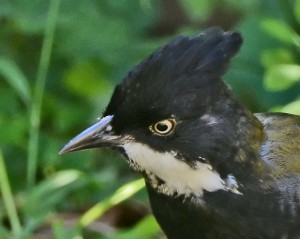
    Walking home through Hays Paddock in Kew East this evening, there were about 20 Gang Gangs up the top end of Glass Creek. I’ve not seen this many here before.

    Bill


    Birding-Aus mailing list

    Birding-Aus@birding-aus.org

    To change settings or unsubscribe visit:

    birding-aus.org/mailman/listinfo/birding-aus_birding-aus.org

  • Canberra’s Little Eagles – in the eye of a coming storm

    Hi folks, Bill the moderator here.

    I’ve received this message from Geoffrey Dabb (gdabb@iinet.net.au), who has
    been having trouble posting.

    Replies to him directly please.

    A large housing development on Canberra’s outskirts has caused a dispute
    about buffers and corridors for a small number of Little Eagles. The ACT
    government has launched a major research project on the eagle (involving
    video cameras at 2 nests, which were subsequently abandoned.) Government
    officials have been tramping over Canberra’s hills to find as many Little
    Eagles as possible. A recent article in Canberra Bird Notes has attacked
    the evidence on which the Little Eagle was found to be a vulnerable
    species. It seems very likely that the threatened status of the Little
    Eagle in the ACT will be reviewed.

    Because the Little Eagle is widespread across Australia, this raises a
    basic question of conservation philosophy – the concept of ‘small-area
    extinction’. The Little Eagle is not listed as threatened nationally but it
    is vulnerable in the ACT and NSW. Recent changes to conservation laws
    across Australia are aimed at a uniform approach. The Commonwealth has
    responsibility for assessing cross-border species, and, given its present
    view, the Little Eagle is not going to be listed nationally (assessed ‘at
    the national scale’’). That leaves the possibility under the new scheme of
    ‘regional listing’ within a particular jurisdiction. The new legislation
    in the ACT (an d I believe elsewhere) has adopted new ‘regional criteria’
    that must have regard to IUCN regional criteria.

    The IUCN regional criteria (page 4) strongly discourage their application
    within very restricted geographical areas, particularly with respect to a
    wide-ranging taxon where ‘the regional population will interchange
    individuals with neighbouring populations’. The Little Eagle is a good
    example of such a species. So are many other bird species now listed, and
    regionally protected, under State/Territory legislation. All threatened
    bird species in the ACT are probably at risk of delisting under the new
    regime. The same test must be applied within larger jurisdictions. Can
    NSW sustain the regional listing of the Little Eagle (or a number of other
    listed wide-ranging bird species) under the IUCN criteria?


    Birding-Aus mailing list

    Birding-Aus@birding-aus.org

    To change settings or unsubscribe visit:

    birding-aus.org/mailman/listinfo/birding-aus_birding-aus.org

  • Repairs to Bushnell binoculars – Melbourne

    Hi folks, Bill here

    A colleague wandered past last night and asked me (as a “known
    birdwatcher”) whether it’s possible to get a pair of Bushnell bins repaired
    – it seems “something” happened to the bins some time ago, but in a house
    of kids it’s hard to know what exactly happened. The collimation is OK, but
    focus mechanism seems to have frozen.

    I’ve looked at the Bushnell website which redirects the reader to a Sydney
    phone number or a Tasco email.

    Does anyone know if there’s a place my colleague can physically take the
    bins to in Melbourne? He’d like to know whether it’s worth repairing them
    rather than posting them to Sydney only to find out they’re cactus.

    The alternative, I guess, is to take them to a camera servicing place like
    (my favourite) Shutterbox in Camberwell. They’ll at least have the tools
    and expertise required to give it a go. Wopuld people think this is a valid
    alternative?

    Any advice, I’m sure, he’d appreciate.


    Birding-Aus mailing list

    Birding-Aus@birding-aus.org

    To change settings or unsubscribe visit:

    birding-aus.org/mailman/listinfo/birding-aus_birding-aus.org

  • Gunbower NP

    Hi folks, Bill here

    I’m planning a trip up to Gunbower National Park in a couple of weeks. It’s
    the first time I’ve been up there.

    I’ve got a couple of questions:

    First, any suggestions for particularly good locations for birds? I’m
    staying between Gunbower and Cohuna, so very close to that part of the park
    itself.

    Second, what are the tracks there like? I normally drive a VW Polo, which
    probably isn’t terribly suitable for the area, but I’ve also got access to
    a Land Cruiser, which, while expensive to run, is probably better suited…

    Thanks!


    Birding-Aus mailing list

    Birding-Aus@birding-aus.org

    To change settings or unsubscribe visit:

    birding-aus.org/mailman/listinfo/birding-aus_birding-aus.org

  • Melbourne CBD Koel (plus late Whipbird note)

    There was a Koel calling loudly from a Moreton Bay Fig in the Jolimont
    Station corner of the Fitzroy Gardens in Melbourne this morning at
    7:30. I didn’t actually see it, but boy, was it calling its lungs out.

    Which reminds me, there was an Eastern Whipbird calling at the Bourke
    Road Bridge a few days ago. First time I’ve heard one there.

    Bill


    Birding-Aus mailing list

    Birding-Aus@birding-aus.org

    To change settings or unsubscribe visit:

    birding-aus.org/mailman/listinfo/birding-aus_birding-aus.org

  • Woodswallow season

    Yesterday I was at Ladys Pass (note lack of apostrophe) north of Heathcote
    in Victoria. I’d noticed some high flying Woodswallows earlier in the day,
    but on the way home I passed a flock of about 25 on or near the ground. All
    the ones I got a decent look at were White-browed, but I can’t guarantee it
    wasn’t a mixed flock.

    Bill


    Birding-Aus mailing list

    Birding-Aus@birding-aus.org

    To change settings or unsubscribe visit:

    birding-aus.org/mailman/listinfo/birding-aus_birding-aus.org

  • Fw: summer 2017 in Tromsø

    Received from Vim Vader, but sausage fingers here hit the wrong button. Sorry!

    Replies directly to Vim, please.

    Bill

    From: Willem Jan Marinus Vader
    Sent: Sunday, July 16, 2017 9:42 PM
    To: Birding-Aus ; Birdchat (BIRDCHAT@LISTSERV.KSU.EDU) ; sabirdnet
    Subject: summer 2017 in Tromsø

    SUMMER 2017 IN TROMSØ

    Outside the sun is shining and it is maybe 15*C; but dark clouds are already gathering, and from later today the next front will again bring cooler weather and more rain, after the front of Wednesday-Thursday and that of Friday-Saturday. Altogether the summer of 2017 has been a moderately unsatisfactory one hitherto: spring was exceptionally late, the ice on Prestvannet went two weeks later than normal, many of the returning songbirds were 10-14 days late to arrive, and there is still considerably more snow than most years in the mountains. I arrived home from a birding trip on 5 June, just in time to see the last snow on the island of Tromsøya and also just in time to enjoy a week of wonderful summer weather; I have written about this before.

    But since then we have had a succession of weeks of unstable and cool weather, and a week ago we even had fresh snow on the hilltops around Tromsø! No wonder then that 2017 has been a bad year for many of our summer birds. Eight pairs of Red-throated Loons bred on Prestvannet this year, but as yet I have not seen a single young. On the shores, where usually this time a year there are lots of eider ducklings, there are now only a few, while flocks of female eiders witness of failed breeding. And today I noticed large flocks of Common Gulls, our ‘house gulls’ here, on the shore, again without any young, and although most young gulls are still small— we had three day-old young in our garden a week ago (Riet went innocently out to photograph them, but came very soon in again–the parents are quite vigilant)— there are too many adults flocking on the shore already, I fear. Also many small birds probably have had a bad breeding season, but not all: today, as usual in late summer, families of White Wagtails fluttered in front of the car on the smaller roads. And the Arctic Loons on Kvaløya do have a young.

    I visited the wetlands of Tisnes today. Many Common Gulls there are still at the nests and may still have very small young, and I saw also a pair of Wigeons with a few ducklings. Just a few Ruffs; numbers of nesting birds have decreased here a lot, and it is just too early probably for migrants to start coming through. Redshanks, Curlews and Oystercatchers alarm frenetically, and I spotted what may probably be the last Cuckoo of the year on a wire. There were a few Starlings, again with no young, but the nearby colony of Sand Martins (Bank Swallows, in always compromising and mediating Norway called Sand Swallows!) in a sand cliff above the road is still active.

    The Tromsø area is a riot of colour nowadays and if this not were a bird list I would tell you more about them. Our island and the area south towards Tisnes are chalk-rich and the vegetation is very luxuriant, helped of course by 24 hrs daylight in 2 summer months (One more week!). Even the usually quite dull marshes are now in their best finery, speckled with waving cotton-grass. And last week on our town mountain Fløya the whole mountain was white with Mountain Aven Dryas octopetala.

    An anecdote at the end. When we had the young gull-chicks in the garden, the local magpie was of course extremely unpopular with the gull parents. For a time he cunningly succeeded to stay on the other side of our maple tree trunk, but in the end he had to flee under my car. Earlier this summer, he had been fiercely attacked by the resident pair of Redwings, but that did not bother the magpie all too much. But the gulls clearly were a different matter.

    All the best

    Wim Vader, Tromsø, Norway

    wim.vader@uit.no


    Birding-Aus mailing list

    Birding-Aus@birding-aus.org

    To change settings or unsubscribe visit:

    birding-aus.org/mailman/listinfo/birding-aus_birding-aus.org