Author: Birding-Aus

  • The koel name tangle

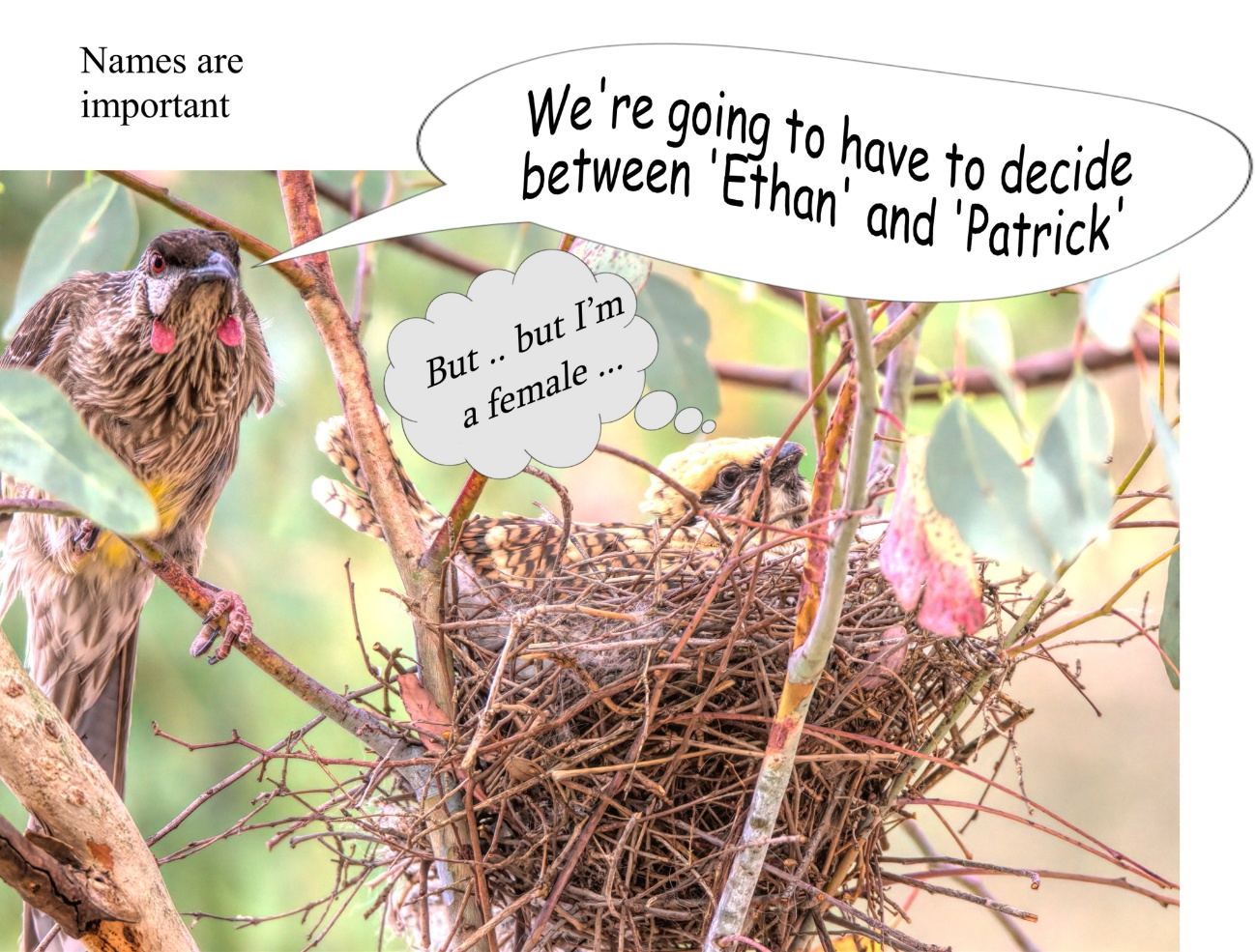
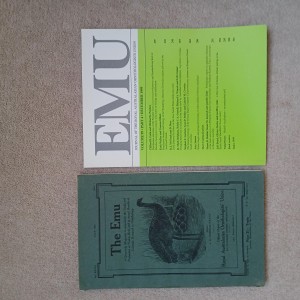
    Thank you Philip.  Yes Phil G found a ‘Carolina Duck’ to go with the ‘Maine Duck’.  I might have mentioned one more we are going to grapple with.  I see Phil’s Birds of NG first ed uses ‘Eastern Koel’.  The story on this is so complicated that it’s hard to trace, but it’s certainly current.  See attached.


    —–Original Message—–
    From: Birding-Aus <birding-aus-bounces@birding-aus.org&gt; On Behalf Of Philip Veerman
    Sent: Wednesday, 16 July 2025 11:48 AM
    To: birding-aus@birding-aus.org
    Subject: Re: [Birding-Aus] Australia Will Be There


    It is curious to think of the role of what people "liked". I prefer Maned Duck because it is an interesting and somewhat descriptive name, whereas "Australian Wood Duck" is long, boring and being a common bird that will often be found, long names waste space. It had not seemed necessary to call it "Australian Maned Duck". I am suspecting there isn’t another duck elsewhere that shares this feature. Short names for common species is part of the reason why Galah is better than Rose-breasted Cockatoo.


    Sorry, I don’t see how any relatedness of Australian Wood Duck to Carolina Duck (if it is not called "Carolina Wood Duck"), is relevant in the "Australian Wood Duck" name issue. Besides there are so many group names that are used for unconnected groups.


    So many different groups of birds that share the same group names of for example: bellbird, blackbird, broadbill, catbird, chat, chough, creeper, finch, flatbill, flycatcher, honeycreeper, magpie, marshbird, miner, nuthatch, robin, sicklebill, sparrow, spinetail, thornbill, tit, thrush, vulture, warbler, wren. 


    Australian Tern is surely unhelpful for that one species, as there are many other species of tern here. Most terns have the same basic colour pattern so finding distinctive names are difficult.


    Philip


    —–Original Message—–

    From: Birding-Aus [

    >> On 14 Jul 2025, at 10:08 pm, Martin Butterfield <martinflab@gmail.com> wrote:

    >> 

    >>

    >> I suspect this will be the first of (at least) a mini-series.

    >> 

    >> Martin Butterfield

    >> http://franmart.blogspot.com.au/ <http://franmart.blogspot.com.au/>

    >> https://mallacootaweatherwildlife.blogspot.com/

    >> <https://mallacootaweatherwildlife.blogspot.com/>

    >> 

    >> 

    >> On Tue, 15 Jul 2025 at 10:15, Geoffrey Dabb via Birding-Aus <birding-aus@birding-aus.org“>birding-aus@birding-aus.org <mailto:birding-aus@birding-aus.org

    >> wrote:

    >> 

    >>     Those with no interest in English bird names, please read no

    >> further. Of the English name changes that are in prospect following

    >> adoption of the unified taxonomy, I might draw attention to a couple

    >> that come from an unfamiliar direction.  The curious ‘Australian

    >> Tern’ is a relatively recent invention with no basis in usage.  The

    >> proposers rejected ‘Australian Gull-billed Tern’ because, from an

    >> international viewpoint,  an adjective (such as ‘Common’) would need

    >> to be added for the northern species,  now just the shorter

    >> ‘Gull-billed Tern’.  The name might excite the interest of North

    >> American watchers, of which there are several subscribing to this

    >> list, I notice.  ‘I’m sure looking forward to seeing one of your

    >> Australian Terns’, they’ll be saying. I do hope they will not be

    >> disappointed if it looks familiar. ____

    >> 

    >>     __ __

    >> 

    >>     The unfortunate ‘Maned Duck’ had the distinction of being one of

    >> the small number of recommended names rejected by popular vote in the

    >> 1980s.  However, it has renewed life, being the choice of those

    >> seeking to promote a set of ‘international English names’.

    >> Interestingly, as you can see from AviList ,  ‘Maned Duck’, in

    >> defiance of the Australian preference, had been the choice of the

    >> three global lists. ‘Australian Wood Duck’, internationally, would

    >> suggest an association with the Wood Duck of America, which might

    >> also have needed another adjective.  However, our North American

    >> visitors might experience some confusion here because the invariable

    >> pronunciation is ‘Maine Duck’.  AviList

    >> https://www.avilist.org/checklist/v2025/

    >> <https://www.avilist.org/checklist/v2025/> ____

    >> 

    >>     __ __

    >> 

    >>     Geoffrey____

    >> 


    <HR>

    <BR> Birding-Aus mailing list

    <BR> Birding-Aus@birding-aus.org

    <BR> To change settings or unsubscribe visit:

    <BR> http://birding-aus.org/mailman/listinfo/birding-aus_birding-aus.org

    </HR>
  • Australia Will Be There

    Those with no interest in English bird names, please read no further. Of the English name changes that are in prospect following adoption of the unified taxonomy, I might draw attention to a couple that come from an unfamiliar direction.  The curious ‘Australian Tern’ is a relatively recent invention with no basis in usage.  The proposers rejected ‘Australian Gull-billed Tern’ because, from an international viewpoint,  an adjective (such as ‘Common’) would need to be added for the northern species,  now just the shorter ‘Gull-billed Tern’.  The name might excite the interest of North American watchers, of which there are several subscribing to this list, I notice.  ‘I’m sure looking forward to seeing one of your Australian Terns’, they’ll be saying. I do hope they will not be disappointed if it looks familiar.


    The unfortunate ‘Maned Duck’ had the distinction of being one of the small number of recommended names rejected by popular vote in the 1980s.  However, it has renewed life, being the choice of those seeking to promote a set of ‘international English names’.  Interestingly, as you can see from AviList ,  ‘Maned Duck’, in defiance of the Australian preference, had been the choice of the three global lists. ‘Australian Wood Duck’, internationally, would suggest an association with the Wood Duck of America, which might also have needed another adjective.  However, our North American visitors might experience some confusion here because the invariable pronunciation is ‘Maine Duck’.  AviList  https://www.avilist.org/checklist/v2025/


    Geoffrey

  • Library Clearance – Typo

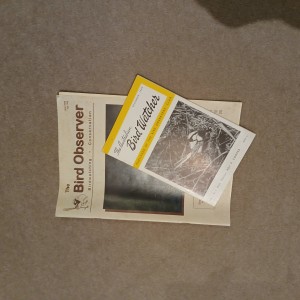
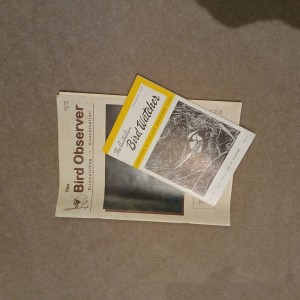
    Sorry folks as has been pointed out (thanks Phil) dates on The Bird Watcher and Bird Observer are 1960 to 1998

    Best Regards
    Graeme Stevens
    St Ives
    0414546001

    From: Birding-Aus <birding-aus-bounces@birding-aus.org&gt; on behalf of Graeme Stevens <gestev45@hotmail.com&gt;
    Sent: Saturday, 12 July 2025 9:03 PM
    To: ‘birding-aus’ <birding-aus@birding-aus.org&gt;
    Subject: [Birding-Aus] Library Clearance


    Hi fellow birders,
    I am in the process of relocating and consolidating two households, and sadly two libraries and offices into one requires some major surgery.
    To start of with and very sadly, much space must be saved by cutting down on periodical libraries and there are two groups I offer for free of course to anyone keen on the archive.
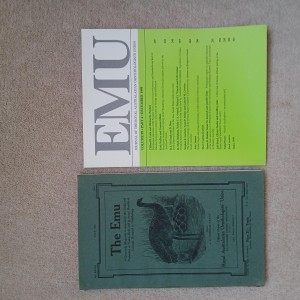
    The first is the Emu – unbound from mid 1950s to 1999 (Vol 99)
    The second is The Bird Watcher and Bird Observer 1960 – 1968 (prior to the merger with RAOU)

    Sadly these must go and I would hate for them to end up in recycling if someone would appreciate the content and the history, so please let me know if you would like either or both.
    Pick up would be St Ives in Sydney though I could move them to the Newcastle area at a pinch.
    BTW Russ has given his support and approval for the post.
    Regards
    Graeme Stevens
    0414546001


  • Library Clearance

    Hi fellow birders,
    I am in the process of relocating and consolidating two households, and sadly two libraries and offices into one requires some major surgery.
    To start of with and very sadly, much space must be saved by cutting down on periodical libraries and there are two groups I offer for free of course to anyone keen on the archive.
    The first is the Emu – unbound from mid 1950s to 1999 (Vol 99)
    The second is The Bird Watcher and Bird Observer 1960 – 1968 (prior to the merger with RAOU)

    Sadly these must go and I would hate for them to end up in recycling if someone would appreciate the content and the history, so please let me know if you would like either or both.
    Pick up would be St Ives in Sydney though I could move them to the Newcastle area at a pinch.
    BTW Russ has given his support and approval for the post.
    Regards
    Graeme Stevens
    0414546001


  • Birding guides for Tasmania?

    We will be visiting Tasmania via cruise ship and are looking to hire
    birding guides at three ports.

    Burnie – 24 December Noon-9pm
    Hobart – 29 December 10am – 11pm.
    Port Arthur – 30 December 8am-5pm.

    We are reasonably keen but elderly couple. Any suggestions or contacts
    would be welcome.

    Thank you.

    Joseph Morlan, Pacifica, CA


    Birding-Aus mailing list

    Birding-Aus@birding-aus.org

    To change settings or unsubscribe visit:

    birding-aus.org/mailman/listinfo/birding-aus_birding-aus.org

  • Japan/Philippines field guides

    Hi all,

    I have upcoming trips to Japan and Philippines and was hoping for some guidance on field guides.

    I still prefer books but open to apps also.


    Japan: I have Mark Brazil’s Princeton guide, but it covers all of East Asia and is pretty bulky: I’ll be cycling so want to keep weight down.

    I can see there is a Japan-only guide by Mark Brazil, probably a pared-down version of the above, but the best price is can see on Ebay is >$70, which is  a bit steep.

    Any suggestions for print or app?


    Philippines: had a look on line; doesn’t seem to be much in the way of bird guides. Not cycling, but backpacking and hoping to travel light.

    Any advice would be appreciated.


    Thanks

    Paul

  • Two Questions

    After 31 years, we are planning another trip to Australia for fall of 2026. Two quick questions:

    1. What is the best birding app for Australia. It seems the main ones are Pizzey and Morecombe.

    2. Is the Daintree River cruise still recommended? If there is more than one, which is best?

    Thanks in advance.

    Eric Jeffrey
    Virginia, USA.

    Sent from my iPhone


    Birding-Aus mailing list

    Birding-Aus@birding-aus.org

    To change settings or unsubscribe visit:

    birding-aus.org/mailman/listinfo/birding-aus_birding-aus.org

  • Vale Lloyd Nielsen

    Some readers will already know the sad news that Lloyd Nielsen passed away earlier this week, at Mareeba Hospital.

    Lloyd was a passionate birder, author and illustrator. He wrote and illustrated several books about birds, including the acclaimed "Guide to the Difficult Small Birds of Australia." Lloyd was putting the finishing touches to a follow-up volume, an identification guide to the medium and large birds of Australia, just prior to his death.

    Lloyd won the J.N Hobbs medal for outstanding contribution as an amateur scientist in 2015. His contributions to birding, bird identification, and raising awareness of the natural world are extensive. He will be greatly missed by those who knew him. 

    Our thoughts go out to Lloyd's family and friends. 


    Russell Woodford
    Birding-Aus Moderator


  • TV ad for Allianz (update)

    Hello All,


    I thought some may be interested in the reply I just got from Allianz about that TV ad. I wrote to them with an edit and some more ideas about the ad than what I sent out earlier. They don’t ask me not to send out the reply. The choice of birds was deliberate but without a direct answer to the issue of whether the choice was related to the issue of the withdrawal of financial support for Adani’s mine in the area of the range of the finch. I got neither a confirmation or a denial of that, but I suspect I am right.  I will let you know if I get an interesting answer from Gruen. Their expression of some creative license to aid in the development of the story is quite an understatement.


    Philip


    From: Allianz Media [Hello All,


    I thought some may be interested in the reply I just got from Allianz about that TV ad. I wrote to them with an edit and some more ideas about the ad than what I sent out earlier. They don’t ask me not to send out the reply. The choice of birds was deliberate but without a direct answer to the issue of whether the choice was related to the issue of the withdrawal of financial support for Adani’s mine in the area of the range of the finch. I got neither a confirmation or a denial of that, but I suspect I am right.  I will let you know if I get an interesting answer from Gruen. Their expression of some creative license to aid in the development of the story is quite an understatement.


    Philip


    From: Allianz Media [pveerman@pcug.org.au&gt;
    Sent: Saturday, May 31, 2025 4:57 PM
    To: Allianz Media <media@allianz.com.au&gt;
    Subject: TV ad for Allianz


    EXTERNAL EMAIL: Check the email is safe before you open attachments or click any links.


    This is a follow on from an earlier message. I now have some more information and a significant question. My enquiry relates to the TV ad for Allianz. It also was discussed on (ABC TV) Gruen this week.

    The ad featured a crudely done computer-generated animation of a Black-throated Finch and a White-bellied Sea-Eagle. Even though someone took the effort to made the birds identifiable. We see a cartoon finch that has supposedly lost an egg during a rain storm. It then absurdly carries its egg in its feet whilst flying and then a cartoon Sea-Eagle gave the finch a lift and carried the egg into an imaginary nest. This story line is entirely and annoyingly ridiculous. People like me need to explain to others who ask, that it is a total nonsense and is entirely AI generated. Nothing of the birds is real. Far too many errors for me to list. For example: The eagle’s beak is not hooked enough. How did the egg get from the finch’s feet to the eagle’s beak? How did the “nest” move so far from its original location to the end location? Why is the nest nothing like the nest of any Australian finch?  I fear that some people might think it is real. I suppose it is sort of cute but highly misleading that anything like this could happen. I and many others wonder what, if anything, this could mean. It looks like the insurance company is satirising themself. Being so clearly absurd, it looks satirical.

    The Gruen panel commented on the Sea-Eagle but none of them even mentioned the finch. They mentioned that Allianz has used a generalised eagle as part of its promotions. On Gruen they suggest the intention was to suggest that an eagle (as in the insurance company) is a powerful friend. If Allianz wanted to make the point, you could have obtained real film of a finch (or other little bird) nesting within the sticks of an eagle’s nest. The finch is as much a part of the ad as the Sea-Eagle, and it may actually be the important character. But why choose such an obscure bird? It is a small, inconspicuous, rare species that lives far from most Australians.

    Can you explain the choice of the Black-throated Finch? This species may have a connection to Allianz withdrawing support for Adani who intended to mine the very limited habitat of that finch. There was a big conservation issue about that proposed mine and this threat to its survival. I wondered if Allianz wishes to reference their association with the conservation issue. It appears that Allianz (and others) had withdrawn financial support for Adani’s proposed mine. As such Allianz played a role of some kind in the urgent issue of conservation for this precious little bird. Will you be featuring updates to the story? Am I on the right track?

  • TV bird ad for Allianz

    I wonder if others have seen and were amused by the new TV ad for Allianz. It also happened to be the discussed as the first item on (ABC TV) Gruen this week. https://iview.abc.net.au/video/LE2428H003S00

    The ad featured a computer-generated animation of two birds, specifically a Black-throated Finch and a White-bellied Sea-Eagle. In this, we see a cartoon finch that has supposedly lost an egg during a rain storm, that rolls down the gutter of a house it then absurdly carries its egg in its feet whilst flying and then a cartoon Sea-Eagle then gave the finch a lift and carried the egg into a nest, that is not the nest of a finch. 

    This is all terribly weird and indeed the story line is entirely ridiculous. It is almost like the insurance company is satirising themself. I suppose it is sort of cute but highly misleading that anything like this could happen. Has anyone got an idea what it is intended to mean?

    The Gruen panel commented on the Sea-Eagle but none of them even seemed to notice the finch, as no one mentioned it. They did mention that Allianz has previously used an eagle as part of its gimmickry. But who know whether specifically a White-bellied Sea-Eagle. The finch is as much a part of the ad as the Sea-Eagle. But why such an obscure bird? Also, worth mentioning that the computer imagery was crudely done, even though the birds are identifiable.

    Philip Veerman