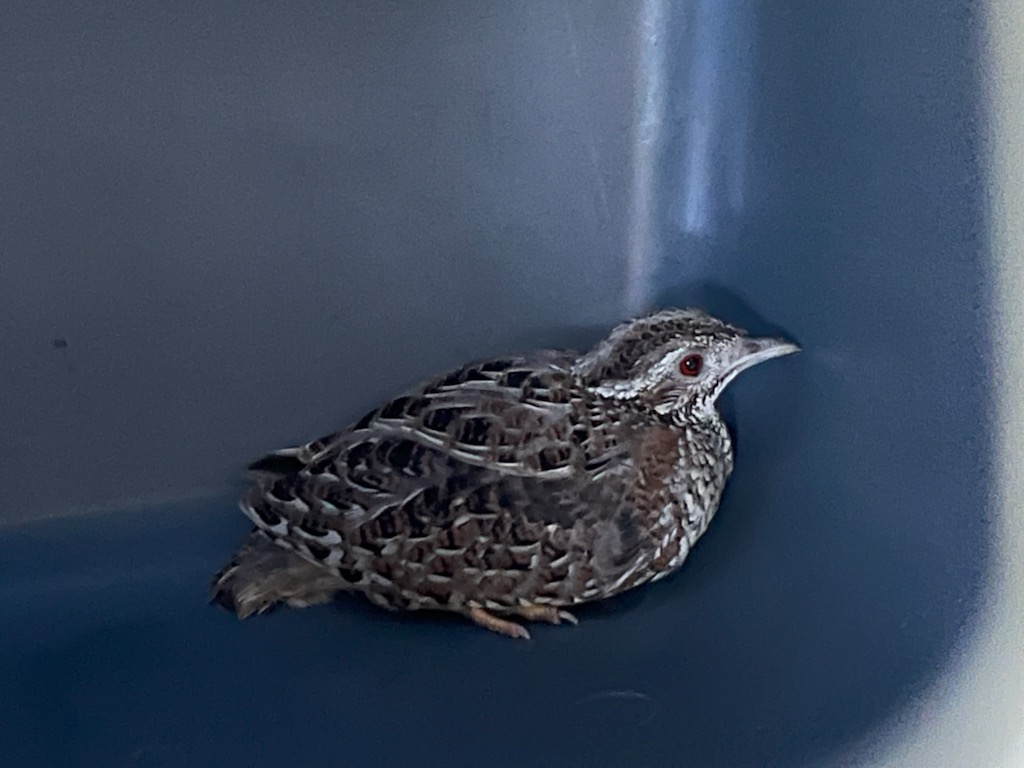
Biological control 2

Our intrusive Koel disappeared after we played Sarrowhawk calls every time. the Koel called,.
The Koel stopped calling and presumably flew off after three or four minutes. Did return a day later but was silenced after one playing of the sparrowhawk call.

Otherwise plenty of birdlife, including two (? a pair) of Whipbirds, feeding on Mulberries !
Very wet and green here in Mulgoa. (50 k West of Sydney Harboir Bridga,

Sent from my iPhone


Birding-Aus mailing list

Birding-Aus@birding-aus.org

To change settings or unsubscribe visit:

birding-aus.org/mailman/listinfo/birding-aus_birding-aus.org

SA borders opening: Special Grasswren tour departure – ADVERT

SA's borders are opening next week! To celebrate, we've put on an extra departure of our 6 Grasswren tour in early Dec., the time of year when many Grasswrens are at their most active. Also good chances of Grey Falcon, Inland Dotterel, Gibberbird, Flock Bronzewing & many other mouth-watering outback birds! 

Contact me directly if interested. 
Cheers,
Peter 
———
Peter Waanders
Bellbird Birding, Wildlife & Photo Tours / Australian Birding Store
———
t:1800-BIRDING (free from landlines in Australia)  or +61 402 738 855
(our office is staffed most, but not all, weekdays. If your phone call is urgent please phone Peter Waanders on +61 409 763 172)
a:PO Box 2008 BERRI SA 5343

A job opportunity dealing with Black Cockatoo habitat assessments in SW Australia has just appeared on Seek

Don’t respond to me about this. It has nothing to do with me. I am just passing this on. Look it up on Seek if you are interested.

The Company

Our client is an award-winning consulting firm that provides environmental science, landscape architecture, and spatial planning services to a diverse client base including the energy and resource sector, local and state governments, and property development. Our client has a friendly and professional team with excellent staff retention, the opportunity to work on a diverse range of projects, and an enjoyable work environment.  You will also be part of a majority employee-owned company, dedicated to client and staff satisfaction, excellence, and innovation. 

The Role

Our client is seeking a self-motivated and enthusiastic Team Lead / Senior Zoologist with extensive experience in consulting or industry experience to join their Environment team.  The successful candidate will be positive, adaptable and team focussed, who is looking to progress their career and contribute to the development of the business. 

Our client offers a friendly personal atmosphere with the opportunity to work on a wide range of projects in all fields of ecology in a team-based environment.  Our client offers flexible work arrangements with time in lieu leave available for field staff.  The role will be based at their North Fremantle office. To be successful in the role the applicant needs to demonstrate that they meet the essential criteria listed below.

The right candidate will have considerable technical expertise in terrestrial vertebrate zoology and proven experience in independently managing projects. You will be responsible for leading and conducting zoological field assessments in Western Australia and will contribute to the development and mentoring of the junior staff. Excellent technical report writing ability is a must.  The candidate will have a sound understanding of relevant State and Commonwealth legislation and guidelines, and the ability to communicate this information, both verbally and in technical reports, to their clients.

Essential Criteria

  • A tertiary degree in zoology, conservation biology, environmental science, or related discipline
  • Basic (Level 1) terrestrial fauna surveys and detailed (Level 2) terrestrial fauna surveys experience
  • Demonstrated experience in conducting Black Cockatoo habitat assessments
  • Experience in writing detailed biological reports for environmental impact assessment and compliance
  • Experience in working with and leading survey teams in remote areas
  • Sound project management experience
  • Ability to work flexible hours and undertake field surveys in remote areas for extended periods
  • Excellent data management and statistical analysis skills
  • Experience in Geographic Information Systems (GIS) (e.g. ESRI ArcGIS and/or QGIS)
  • Current manual Western Australian Driver’s License

Desirable Criteria

  • Experience working in mining, heavy industry, or infrastructure-related projects
  • Experience in Biodiversity Offsets
  • Remote 4WD experience
  • First Aid certificate


Egrets

Up here on the Gold Coast I have been photographing a colony of Egrets from across the water to a small island, the rookery consists of Eastern Great Egrets, Plumed Egrets , Little Egrets and now many Eastern Cattle Egrets have moved in.

They are not disturbed by my presence as I’m in cover and they come and land within three mts of me to pick up sticks for their nest building.


There is a single male Eastern Great Egret who sits and stands in the same spot on a platform he has made by bending down branches and leaves in a Rubber Tree

and performs its courtship ritual day after day.


He stretches his neck straight as far as he can go, pointing his beak high to the sky standing as high as he can to make himself look big.

He then bends his neck and runs his beak down his breast right down between his legs.

He then straightens his neck and points his beak into the leaves low down from the position he is standing in the Rubber Tree and pulls at the leaves.

Then he squats and ruffles his feathers and plumes, opens his wings half way but does not flap them and does a shimmy while squatting up and down and then does it allover again.


This has gone on continuously for days with preening and sleeps in-between.


I can see it is getting very frustrated and agitated, not being able to attract a mate.


Several other males standing on unfinished nests often do the same courtship ritual.


He watches all the others males gathering sticks and bringing them back to their mates for her to build the nest.


He eventually went and got a stick and stood on his platform for a long time playing with the stick until he decided to present it to a female making a nest nearby that he had been watching , she resented his presence and a fight broke out and he gave her a terrible belting so much she took off until her mate came back.


A couple of days later there was great commotion as he had approached the nest again while both birds were present and a fight broke out that was that vigorous that both males ended up falling and landed in the water below.


The nest building continued and there were about twelve pairs of Eastern Great Egrets nesting within ten mts of the bachelor.


I was watching one particular male taking off and going to the bank of the pond to pick up sticks and it was on my left and as he came back each time he went behind some trees out of sight and as I was getting some good shots I would focus on the female and as he appeared I would catch him approaching and handing over the stick to his mate for her to place in the nest.


This went on for nearly an hour and I noticed the bachelor had moved to a position where he could see the male come and go and was watching closely.


I didn’t think much of it until looking through the camera I saw the male leave his nest and when he went behind the tree the bachelor flew in pinned the female down so she could not move and mated with her  ( RAPED  HER )  getting off just before he mate arrived back, none the wiser !!!


My question.   Is this a normal thing for Egrets ?


I have photographed gangs of Australian White Ibis strutting around under the rookery and when a pair of Ibis try to mate they rush and push in and gang rape the female.

I have photographed all these goings on and would like to hear your thoughts .


Barney


Super Magpie Families

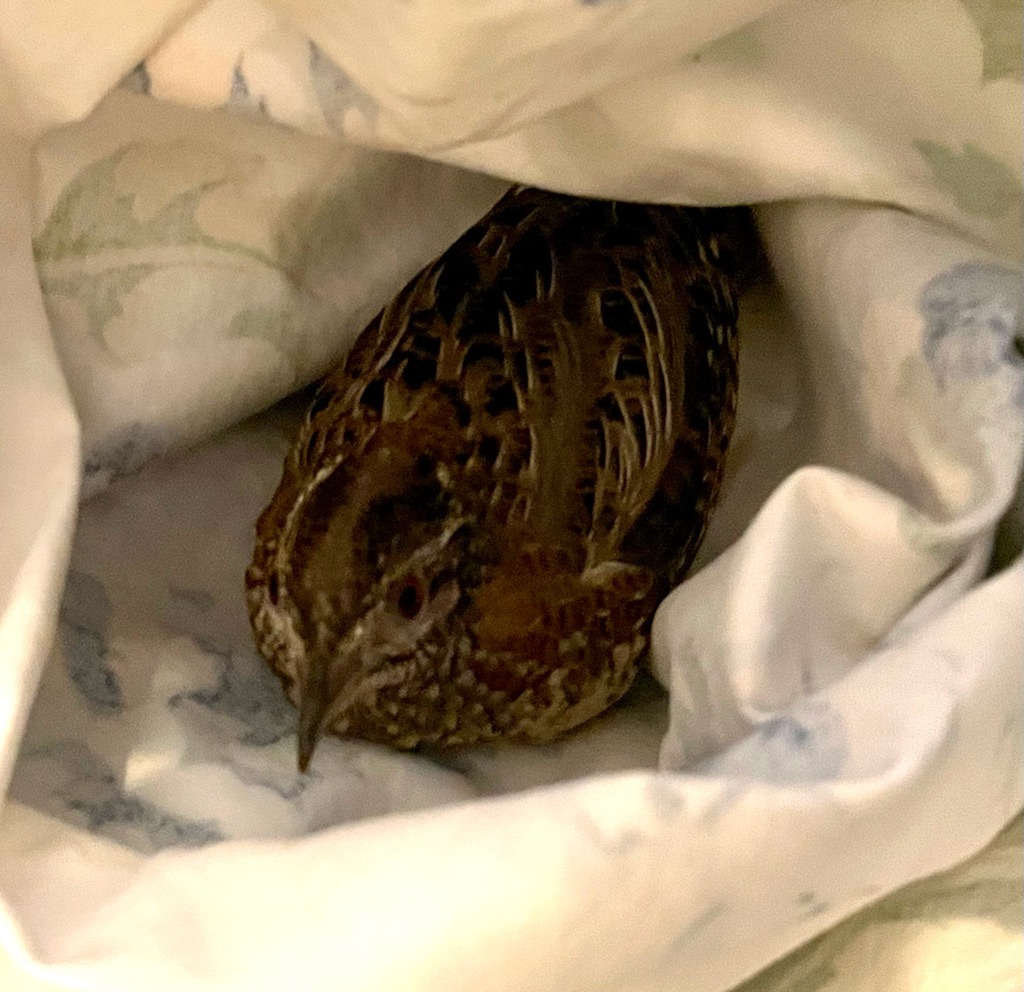
Alongside the Mangalore Flora Reserve in northern Victoria was a large bunch of Magpies… unusual… or maybe not… I’d be interested in your experiences of similar events…

www.ararelitus.com/blog/super-magpie-families

Chris Shaw
seashore@internode.on.net
+61 409 675912

www.ararelitus.com

After the game, the King and the Pawn go into the same box. – Italian proverb


Birding-Aus mailing list

Birding-Aus@birding-aus.org

To change settings or unsubscribe visit:

birding-aus.org/mailman/listinfo/birding-aus_birding-aus.org

John Blay and the southern forests

Hi all,
I caught up with author and bushman John Blay for an interview last week in Eden, NSW. John has written numerous books including a trilogy about Australia’s southern forests such as On Track: Searching out The Bundian Way. John also discovered Blay’s Wattle (acacia blayana). If you love nature and birds his books are highly recommended.
The devastation from the 2019/20 fires in the region is still horrifying to see. John said there was almost a complete absence of the normally extremely common superb lyrebirds and many had also been killed scratching for food along roadsides.
Perhaps most distressing for me was the state of Kosciuszko National Park (KNP). 1000s of hectares of dead trees (caused by the drought then “finished” by the intense fires) and vast tracts of dead snowgum from die back.
The plains that were once ancient scrub had burned and have since been consumed by weedy grass.
The only way to describe the KNP scenario, even after almost 2 years, is nuclear. 
Both the evidence and presence of brumbies were almost everywhere. In the forest, grasslands, bogs, waterways, walking paths and roads. 
The interview with John is available here: 
Best,
Charles Hunter
Bronte, Sydney