FW: SLOW, BUT SURE START OF SPRING AT 70


From: wim vader <wjm.vader@gmail.com&gt;
Sent: fredag 28. mai 2021 12:26
To: Willem Jan Marinus Vader <wim.vader@uit.no&gt;; Wim Vader <wjm.vader@gmail.com&gt;
Subject: SLOW, BUT SURE START OF SPRING AT 70


Sendt fra E-post for Windows 10

ME SKAL KOME, OM IKKJE SÅ BRATT

           This Norwegian saying would fit well for spring 2021 in Tromsø at 70*N in Northern Norway. It roughly translates as : ‘We will come, but not quite so suddenly’. And that fits excellently for this spring, which is arriving in fits and starts. Today we have 5*C and rain, but last week we had a few days with temperatures of 13-14*C (I know, does not sound all that warm for most of you) and it made a lot of difference. There is nothing more wonderful than the arrival in spring in an area with as large seasonal variations in weather and light as here. I have lived in California, Sydney and Cape Town for a period, and all these places have much greater diversity and to be honest, a much easier climate, than Northern Norway. But I missed this glorious yearly rebirth of nature, that we experience up here every spring.

         Three days ago, the last snow in our garden disappeared, and it now looks as if the birches finally are leafing. The 100 000s of Coltsfoot flowers are fading close to the sea and on South-exposed slopes (Although the Siberian Primroses still are doing very well and now carpet some lawns) and a few new flowers  have appeared: Dandelions and Buttercups along the roads, Marsh Marigold Caltha in ditches and marshland, Wood Anemones Anemone nemorosa in Folkeparken , and the inconspicuous small white bells of the Arctic Bearberry Arctostaphylos alpinus on the Heath (No Cloudberry flowers as yet).

         And also the migrant birds return one after the other—and having access to my car again I can cover a somewhat wider area. Willow Warblers, our most numerous bird, were back the day after my last piece, and their pleasant, somewhat melancholy song strophes are now ubiquitous. The first Pied Flycatcher of the year was in our garden, but these last days I have seen them at a number of different places; they are now vying with the Great Tits for the many nest boxes. A return visit to the Tisnes wetlands showed the same three Ruffs still competing, but this time there was also a single Ruddy Turnstone, and 2 beautiful black Spotted Redshanks, the latter still on migration further North. And here on the island I surprised a late small flock of Purple Sandpipers; these winter here, but migrate further North or up into the hills to breed. Tisnes also yielded the first Meadow Pipit of the year, a very common bird up here.

        Day before yesterday was still nise and sunny, 13*C. I first drove to lake Prestvannet at the top of our island of Tromsøya, where we enjoy as many as 10 pairs of nesting Red-throated Loons; but this small lake was still completely ice-covered. So I continued to the outlying large island of Kvaløya, between us and the sea. The first stop, at a small bight where there often are interesting shorebirds, did not yield much: gulls, Oystercatchers, a few Redshanks, and a lone Golden Plover; as often before, there were Reindeer in the Fields behind. Then I drove the c 30 km to another favourite area: the wetlands at Rakfjord, along the Kvalsund, that divides Kvaløya from the more Northern large island of Ringvassøy. Here, as I have described before, the rocks are not chalk rich as on Tromsøya, but very hard and acid, and consequently the vegetation is completely different and  much less luxuriant, and spring often is a bit late.

Also here many Reindeer grazed, but otherwise the marshes and low hills still did not feel all that spring-like and there were few marsh birds, only the ubiquitous Common Gulls and the always larming Redshanks; no Arctic Skuas (Parasitic Jaegers)as yet, no Whimbrels or Snipe and here no Golden Plovers either. But the low-lying small lakes here were already ice free, and on one the resident pair of Arctic Loons had returned, while the same lake now also sported a pair of Whooper Swans, no doubt the pair that most years nests in a lake a bit higher up, now still frozen over.

A bit further along the road to Kvaløyvågen there is a small thicket of mostly willows and stinted birches. Here there are often Willow Grouse and I heard one cackling also now. When I got it in view, it turned out to be halfways in the change to summer plumage: head and breast already warm brown, the rest still winter-white. The same thicket hold a few small birds which I am almost sure were Redpolls—very common there in summer–, of course the Willow Warblers were singing also here, but there was also a more brilliant song, the bird the Saami call ‘the bird with a thousand voices’, my favourite small bird, the Bluethroat. This one was not quite in full song as yet, but nevertheless so full in enthousiasm, that a few times it launched itself into the air a bit, in the way of Sedge Warblers or Common Whitethroats.

On the way back I had to brake hard for a reindeer with a very young calf on the road, and I was now so excited about all the new year birds that I, in vain, tried to turn 4 Red-throated Mergansers into Common Mergansers,  and a circling ‘raptor’ into a Rough-legged Buzzard. This last one turned out to be a Northern Raven!

But this day would give a last pleasant surprise: while driving  over the bridge connecting Kaløya and Tromsøya, the first Arctic Tern of the year flew across! Year bird nr 59.

Wim Vader, Tromsø, Norway

PS Let me know if this  is a surfeit of information from a faraway place. I have been criticized for this before.
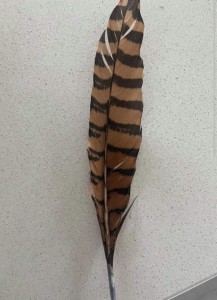
Unreported White-throated Needletail sightings.

G’day Bird Observers, I am working on the last seasons WTNT report so if you have unreported sightings I would love to receive them please.

One interesting observation was by Demetrios Bertzeletos who saw an estimated 6,000 WTNT at Surfside 22nd March. This would be the majority of the total population and might explain why most observeres made fewer sightings than in the previous season. If you did not see this flock you had less birds to make up the numbers you & I did see. Your sightings are important – as they helped me give advice to both the NSW & Australian Governments earlier this year on new regulations to protect this species. Thanks for your help.

Happy swift watching and reporting

Sincerely

Mike Tarburton.


Birding-Aus mailing list

Birding-Aus@birding-aus.org

To change settings or unsubscribe visit:

birding-aus.org/mailman/listinfo/birding-aus_birding-aus.org

David Fisher RIP

Very sad news that David Fisher of Sunbird Bird Tours died in his sleep on May 22, his lung cancer treatment was unsuccessful and we have lost a terrific birder and all round nice guy, well known to many Aus birders from this frequent visits over many years. RIP David, sorely missed

Phil Gregory
ornithological writer/tour leader/tour facilitator
Field Guides / Sicklebill Safaris / Cassowary Tours
PO Box 597
Malanda
QLD 4885
Australia

Ph: +61 7 4096 8063 

Email: info@s2travel.com.au
Website1: http://www.sicklebillsafaris.com OR www.birder.travel


Curtis island QLD

Hi all
Just wondering who has been to Curtis Island QLD near Gladstone and what birds I should expect to see/what I should look out for…
I saw a post about the Capricorn Yellow Chat on Curtis island…could anyone give me any info on possible location if that’s allowed??
We’ll be there in just over 3 weeks time

Thanks heaps
Kirri 😊

Sent from my iPhone


Birding-Aus mailing list

Birding-Aus@birding-aus.org

To change settings or unsubscribe visit:

birding-aus.org/mailman/listinfo/birding-aus_birding-aus.org

Naretha BlueBonnets

Hi all. In about a week’s time, we plan to be on Koonalda Road which, for those in the know, is off the Eyre Hwy in western South Australia – on the Nullarbor. We have given ourselves an entire day to find some Naretha B-Bs somewhere along this road. The best area, from eBird reports, seems to be between the Hwy and the Homestead. I am hoping that someone in the birding-aus community can give me some more detailed spots along this particular road – distances??, co-ordinates??, left/right, east/west, N/S?? – for us to concentrate our initial searching. Any info. will be gratefully received.

We will then be staying at Border Village that night. B-Bs have also been reported from there. Again, any info for this site re where to look – eg  between the R/H and the beach, around the airport or just over the border – will also be welcomed. Please reply directly to us if that suits you.

Cheers

Brian & Meg Johnson


FW: A day on the outer coast


From: Wim Vader <wjm.vader@gmail.com&gt;
Sent: mandag 17. mai 2021 18:54
To: Willem Jan Marinus Vader <wim.vader@uit.no&gt;; Jan Willem Vader <jw.vader@chello.nl&gt;; Lena de Vries <lenajee@ziggo.nl&gt;; PG Nell <pgnell47@gmail.com&gt;; Hayo H.W. Velthuis <hhwv@xs4all.nl&gt;; Marit Vader <marit.vader@evidensia.no&gt;
Subject: A day on the outer coast


17 May is Constitution Day here in Norway and normally a day full of processions, horn music and bunader (traditional clothing). But as you all know, this is not a normal year and just as last year, all these festivities had to be canceled. So my daughter Marit had the excellent idea to invite me for a trip from Tromsoe to the outer coast, some 50 km by road. And as luck would have it, today the weather is excellent: light clouds, little wind, a lot of sunlight, and up to 13*C (may seem cool to you, but the warmest day of the year until now).

We drove to Hillesoey by the shortest route, across the large island of Kvaloeya. All the way the roadsides are festooned by flowering Coltsfoot; we must have seen 10.000s of them during the day. Otherwise spring has not really arrived here: most of the fields are snow-covered, the birches are bare (but many willows are in flower) and the Coltsfoot and the small also yellow Siberian primroses of the road verges are the only flowers.

The small outer islands of Sommaroey (a thriving fishing village) and Hillesoey are connected to Kvaloeya by a long and narrow bridge. Just before the bridge I noted (twice even) my first year bird: the unmistakable Black Guillemot.  We parked the car on Hillesoey and walked my well known route to the sea side. Here all the snow has gone, but many areas are quite waterlogged.

 To my disappointment, there were few signs of spring here,  not in the vegetation either: no flowers as yet on the Cloudberries and in fact no flowers and very little green at all as yet. The birds yielded more promises: pairs of stately Greylag Geese occupied their territories, the large gulls (Herring and Great Black-backed) probably have eggs already and the Oystercatchers were ‘tepeeting’ everywhere. No less than 4 impressive, although somewhat unkempt looking immature White-tailed Sea Eagles sat on some offshore skerries (here also the lone Shag of the day, as well as several Great Cormorants). We picnicked near the shoreline–quite low ebb–and watched a Herring Gull dive up a sea-urchin and drop it on the rocks (the island is full of sea urchin rests). Red-throated Mergansers were almost ubiquitous today, as are the Common Eiders, with here and there a few Mallards, and we were lucky to watch a line of some 10 Pink-billed Geese fly over, on their way to Svalbard. A lone Wheatear in a bare tree was probably still on migration; I’ve never seen them on Hillesøya before

We returned along the longer coastal route, skirting Malangen all the way. On the extensive cloudberry marshes near Brensholmen the Arctic Skuas, that always nest here in some numbers, had not yet arrived, but we found the first Whimbrels for 2021. Here in N. Norway the Curlews nest always close to the coast, while the Whimbrels nest more inland and often in the hills. Also along Malangen we saw many mergansers and regularly Greylag Geese, and lots of eiders. A single Starling made its way on my year list, as did a tight flock of some 25 Red Knots; a few 1000s of this species have a staging area in the nearby Balsfjord, on their way to the nesting areas in Greenland and Arctic Canada.

Our last stop was the marshy peninsula of Tisnes, about which I must have talked to you too often already. I wanted to show Marit displaying Ruffs and luckily there were 3 colourful males obliging. Also this species has decreased a lot around here, as a nesting bird. This is also the area where I already in many years search for a beautiful spring flower, the Purple Saxifrage (looks more pink than purple to me) Saxifraga oppositifolia. There used to be many, but their wonderful chalk-rich flower meadow has these last years been trampled into pieces by many horses. Still, also this year we found a single group of flowers, for me always the official start of spring. We also added the 9th year bird for me, a pair of Wigeons, common nesters in the area.

No swallows or terns as yet, and no Willow Warblers, but spring is definitely on its way also at 70* N.

Wim Vader, Tromsoe, Norway


Spring Migration in Canada

Dear List,

I started birding in Australia when I did a postdoc there in math at the
University of Melbourne. I got 295 species of birds there. It was a
truly unforgettable experience. I still remember finding the Noisy Pitta
by its rustling in the undergrowth in Cape Tribulation and the cacophony
of hundreds of Galahs flying towards me at Terrick Terrick.

Being from Canada, I came back here for a permanent job. Of course, I
didn’t stop birding. I recently decided to take a trip down to the Great
Lakes to experience the ‘Warbler Migration’. Warblers are small
passerines with a great variety of colourful breeding plumages and their
spring migration is probably the highlight of Canadian birding. There
are 110 species of them. I still only have a small number in my list: 21.

But when the conditions are right and the forest swarms with these
colourful birds, the experience of seeing them is amazing. I did have to
get up quite early (5AM) to see them in time as they are very regular in
their appearance when the conditions are right. If anyone is planning a
trip to North America for birds, targeting warblers would be a trip
highlight for sure.

I made a video of the experience for those interested:

Sincerely,
Jason


Birding-Aus mailing list

Birding-Aus@birding-aus.org

To change settings or unsubscribe visit:

birding-aus.org/mailman/listinfo/birding-aus_birding-aus.org