Blog

  • Invitation to attend Bushland Focus Group for Manly Dam

    Hi everyone in Sydney – if anyone can get along to this meeting it might be helpful to put forward some comments and views from the birding community. I may even be there myself 🙂

    Russell Woodford Birding-Aus List Owner russell@birding-aus.org Geelong Victoria Australia http://www.birding-aus.org

    Begin forwarded message:

    > From: Erica Griffiths > > > I understand that some of the keen Birding people use and enjoy the > area around Manly Dam. If this is true, Warringah Council would > really like to hear from some of your members about what is > important and what they value about Manly Dam. > > In this regard, I would like to invite you to the Bushland Focus > Group meeting as part of the preparation of the new Plan of > Management for Manly Dam (officially known as the Manly Warringah > War Memorial Park). > > The Bushland Focus Group Meeting will be held on Monday 28th June at > Warringah Council’s Banksia Meeting Room – Civic Drive, Dee Why, > commencing at 5:30pm and concluding at about 7:30pm.. > > At this meeting Warringah Council will be asking – “Why is Manly Dam > important to you?” and “What do you value about the area?” > > Please feel free to forward this invitation or to invite other keen > bird watchers in the manly dam area to this meeting. > > > > Erica Griffiths| Council contact > > > > GETTING THERE – Just to let you know… > If you are arriving by car – there is a car park on the corner of > Pittwater Rd and St David’s Ave in Dee Why, just outside Dee Why > Library. > If you are arriving by bus – you need to alight at the main Dee Why > bus stop on Pittwater Rd – which is across St David’s Ave from the > Dee Why Library (if you are travelling north) or acrossPittwater Rd > from the Library (if travelling south). > To get to the meeting room walk up St David’s Ave to Civic Dr and > follow the footpath directly to the Council Chambers. Then go down > the stairs into the building and the Banksia Meeting Room is just > inside. > > > > Find it at CarPoint.com.au New, Used, Demo, Dealer or Private?

    ============================== To unsubscribe from this mailing list, send the message: unsubscribe (in the body of the message, with no Subject line) to: birding-aus-request@vicnet.net.au

    http://birding-aus.org ==============================

  • Top End in June, trip report.

    Hello I want to thank everyone for all the great advice for my trip to the Top End. Had an amazing time and absolutely perfect weather compared to what Melbourne is going through 🙂 Here’s a trip report i’ve scrawled out, my first trip report so be gentle.

    Me and my Dad left Melbourne Friday night. The basic outline of the trip was to stay 2 nights in Darwin, 3 in Kakadu and 3 at Fogg Dam, leaving Saturday morning. I was lugging around a Canon 7d, 300/2.8 and teleconverters throughout the trip so doing a lot of walks was a bit of a hassle but ultimately it was all worth it. Anyway on to the trip:

    Saturday 12 June

    We arrived in Darwin at 12am on Saturday the 12th of June. After getting a 4wd from the airport we headed to the Holiday Inn in Darwin and slept till dawn.

    After some breakfast we headed for Buffalo Creek as our first stop. There we saw about a half a dozen Black and Whistling Kites around the beach area and flying overhead. We would see hundreds more by the time the trip was over.

    A power line running through the area gave us Rainbow Bee-eater, Bar-Shouldered Dove and a very indifferent Forest Kingfisher that I took about a hundred shots of.

    Around the area was: Varied Triller (new), Rufous-Banded Honeyeaters (new), Green-backed Gerygones (new), Yellow White-eye (new), Brown Honeyeater (new), Double-barred finch (new), Red-headed Honeyeaters (new) and Masked Woodswallow (new) Flying overhead were the first Red-tailed Black Cockatoos (new) of the trip, would see a lot more of them later as well. Over the creek I got a blurry shot of a Gull-billed Tern (new) and at the boat ramp we saw a grey morph Eastern Reef Egret (new) fishing.

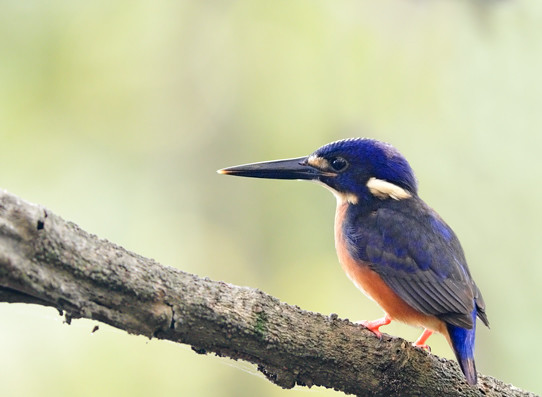
    White-bellied Cuckoo-shrikes and Figbirds were also pretty common. Also got a glimpse of an Azure Kingfisher by the boat ramp but it flew off right away :/

    Completely failed to find the Chestnut Rail but honestly I wasn’t really looking that hard for it. There was a muddy log suspended over a creek to get to the path following the water which we only realised after a few hours. By then the mosquitoes and midges were getting a bit much and the monsoon forest was way too dense to see anything.

    A large water barrel near carpark was a great spot to camp out for Double-barred Finches and Red-headed Honeyeaters but by around 11 we decided to leave.

    Midday we headed to the Darwin Botanic Gardens to look for the Rufous Owl. Didn’t see it unfortunately although it had been sighted the previous Sunday along the Rainforest Loop. Not much else of interest in the Gardens, just more Bee-eaters, a Spangled Drongo and the first White-gaped Honeyeater (new) of the trip. Did see an nice lizard in the leaf litter as well.

    After a quick rest we headed for East Point in the afternoon. Wasn’t too much around, the forest walk we took was very quiet. Two birds we did pick up were Northern Fantail (new) and Lemon-bellied Flycatcher (new). Not much besides that except some Orange-footed Scrubfowl and a family of Figbirds.

    Spent the second night at the Holiday Inn in Darwin.

    Sunday 13 June

    Sunday morning we headed for Howard Springs, arriving just after 8 am. No one else was around at that time and the large lake was closed to swimming due to micro-organisms. It was also host to a few turtles that swam very close to the causeway.

    Taking the rainforest walk clockwise we immediately saw Rainbow Pitta (new) and got a few shots off.

    This area was absolutely swarming with mozzies! Only the first half of the rainforest walk seemed to have any birds and we saw: Leaden Flycatcher (new), Shining Flycatcher, Sacred Kingfisher, Large-billed Gerygone and more Spangled Drongos.

    Looking around the lake we saw the first Red-winged Parrots (new) of the trip flying overhead. Around the carpark side of the lake we also saw Rose-crowned Fruitdove (new) feeding in a tree. Also around the picnic area was a very confiding pair of Mistletoebirds.

    At 11am we headed back to Darwin to check-out, saw a Brahminy Kite, and drove off to the next destination: Kakadu.

    Along the highway we got Blue-winged Kookaburra (new), some Red-winged Parrots outside a service station and lots of Whistling Kites and RTBCs.

    Midway to Kakadu we searched for the Mary River excavation pits and accidentally went to an active mining site. Apparently they were going to start blasting soon so we had to leave! Whoops Clearly I needed to plan better directions for this area, which I eventually did in Kakadu.

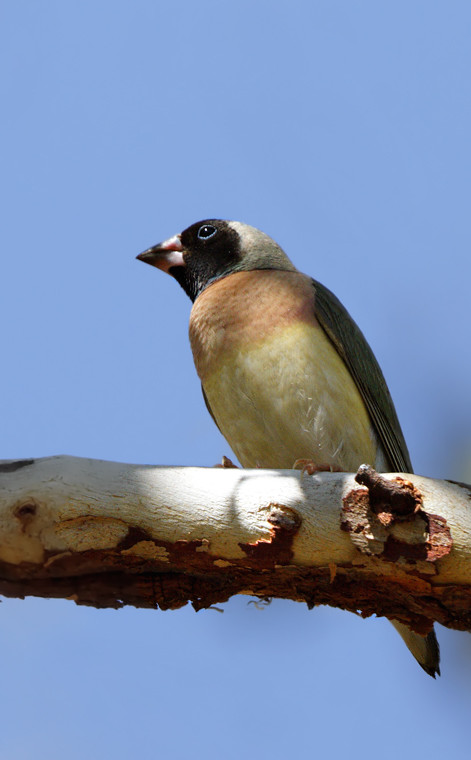
    Unsuccessful in finding the pits we headed to Bird Billabong in Mary River NP (proposed.) Right away I spotted a small family of finches along the walk. I got some pictures but couldn’t ID them at all since the one I found had rather faded colours. It was only when I arrived home that I found out that it was a black-faced Gouldian Finch! (new). Oh if only i’d known, I would have looked for a more colourful one…

    Aside from that, the walk around Bird Billabong produced: Banded Honeyeater (new), a family of Rufous Whistlers, lots of Little Woodswallows (new), White-throated Honeyeater, White-winged Triller and Plumed Whistling-ducks (new)

    On the road again and still looking for the ephemeral excavation pits we stopped at a small pond of water just before Mary River and found a Radjah Shelduck (new) with a dozen ducklings in tow and a Forest Kingfisher.

    Aside from Black and Whistling Kites along the road to Kakadu we didn’t see anything new and stayed at the Gagudju Crocodile Holiday Inn (very overpriced but seemed to be the only good accommodation in the area)

    Monday 14 June

    Monday was full of disappointments. I had told myself to avoid Gunlom but I just couldn’t shake the feeling that we might find that stupid Grasswren. So I figured we could head for Pine Creek to look for the Hooded parrot and on the way we would stop at Gunlom.

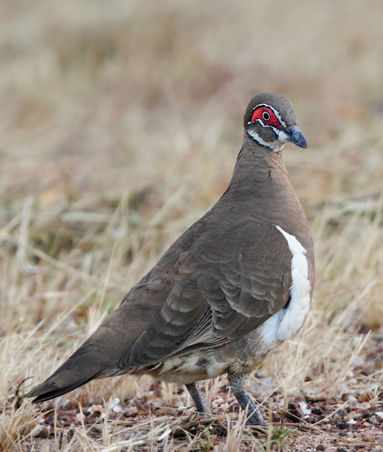
    As soon as the trip began we saw a pair of Partridge Pigeons (new) along the side of the road. Couldn’t stop anywhere for a picture and they were gone by the time we returned.

    We then stopped at the Mardugal billabong to look for some birds. Couldn’t find the way around the billabong and aside from a Blue-winged Kookaburra there wasn’t much around.

    On the way to Gunlom we stopped at some large termite mounds to take some pictures. Wasn’t expecting to see any birds but sitting on one mound was a bunch of Little Woodswallows and a young Masked Finch (new). Also in the area was a Jacky Winter and Peaceful Dove.

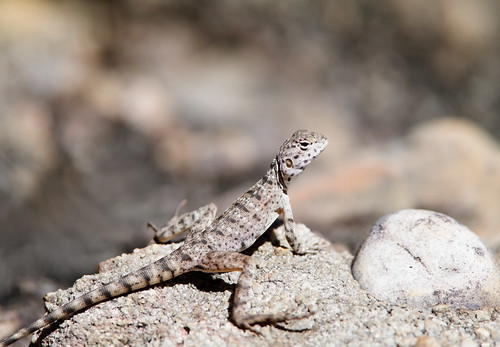
    Arriving at Gunlom we hiked up the escarpment and searched in vain for the sandstone species. We found one, a small bird in a far off tree which I later IDed at home as a White-lined Honeyater (new). The climb back down was a bit depressing after the lack of birds but seeing a nice lizard was a bit of a consolation prize.

    Finally we got to Pine Creek in the middle of the day, I’ll spare the foreshadowing and say outright that we didn’t see any Hooded Parrots around. Did get Grey-crowned Babbler (new), Red-browed Pardalote (new), Great Bowerbird (new), Yellow-throated Miner (new), Blue-faced Honeyeater and Pied Butcherbird. The Miner was the only bird we didn’t see again on the trip but I guess that’s something at least.

    Heading back to Jabiru we again found a pair of Partidge Pigeons on the side of the road at the junction between Arnhem and Kakadu hwys. Finally got some pictures of one through the car window although the light was fading. Also overhead we saw the first Black-necked Stork (new) of the trip.

    Stayed in the crocodile inn again this night.

    Tuesday 15 June

    Tuesday morning we went out on the dawn cruise at Yellow Waters.

    This was a great cruise and I got lots of great shots of White-bellied Sea-eagle and Whistling Kite in the morning light. Birds we saw included: a pair of Brolga (new), Nankeen Night-Heron, White-breasted Woodswallow, pair of Black-necked Storks in a nest, pair of Wandering Whistling-ducks (new), Intermediate Egret (new), Pied Heron (new), Glossy Ibis (new) and an extremely close look at a Sacred Kingfisher. Lots of nice photos there 🙂 Only saw one crocodile though, a small one that didn’t move at all.

    For me the highlight of the cruise was a Red-backed Kingfisher (new) which we never saw again on the trip. The cruise operator told everyone it was a Sacred Kingfisher but I couldn’t bear to correct him.

    After breakfast with the cruise we headed to Mamukala Wetlands. There we saw our first Comb-crested Jacanas (new), some Crimson Finches (new), a pair of Long-tailed Finches (new) and a dark morph Brown Falcon. We also met a couple who recommended the Corroboree Billabong cruise saying it was better and cheaper than the Yellow Waters one.

    Back in Jabiru we booked the 3 hour Corroboree cruise for the next day and had a rest,

    In the afternoon we headed for Nourlangie Rock to make another attempt at some sandstone birds. I really wanted to see that Rock-pigeon but we only saw a Brown Honeyeater and female Mistletoebird. It was amazing how many tourists were trying to find that Mistletoebird just because I had my lens pointed at it 😛 Before we left, the ranger at Nourlangie told us that she regularly saw a lot of finches around the lake in Jabiru. We decided to give it a go and headed there in the late afternoon.

    The lake at Jabiru was a very nice spot for birds. Gold-headed Cisticolas were out in force as were the Red-backed Fairy-wrens. I only saw one male but managed to chase him down for some shots. Little Friarbird (new) and Bar-breasted Honeyeater (new) were also some good finds as was a cooperative Blue-winged Kookaburra.

    The light was going to we eventually called it a day and stayed the third night in the crocodile inn.

    Wednesday 16 June

    We headed out from Kakadu in the morning to try and make it to the Corroboree Billabong Cruise by midday.

    Along the highway we got great views of a Black-shouldered Kite and a pale Brown Falcon. We stopped at the Gungarre Walk but the forest was pretty dead. By this time I decided Monsoon forests aren’t all that great, lots of mosquitoes and often very quiet. Did see an Arafura Fantail (new) and outside the walk was a flock of Little Corellas (new). Also saw the first and only Rainbow Lorikeets of the trip flying overhead.

    Back on the road we stopped at the REAL excavation pits whose location I had researched in Jabiru. It was rather dry and there wasn’t much there in the middle of the day, just a few Crimson Finches hiding in the trees 🙁

    Around the Corroboree, before entering the cruise we saw a family of Brolga and a White-necked Heron in a shallow wetlands area.

    The Corroboree Billabong cruise was great but we didn’t see any new birds. Highlights were: White-bellied Sea-eagle nests, Comb-crested Jacana nesting with chicks, nesting Magpie Geese and a Darter with chicks. We saw 4 or 5 Saltwater Crocodiles one of which leapt out of the water right in front of us!

    After the cruise we headed for Fogg Dam and drove along the dam wall. Due to a large crocodile on the loose we couldn’t walk the dam wall but driving it seemed fine. We saw the crocodile from the large viewing platform at the end of the wall as well as getting some nice shots of Crimson Finches.

    Finally we checked into Eden B&B near Fogg Dam.

    Thursday 17 June

    Thursday I was on a mission. Azure Kingfisher had eluded my camera the entire trip and I hadn’t even seen a trace of the Little Kingfisher. We headed out at dawn and went down to the Woodlands to Waterlilies walk at Fogg Dam. As we entered the flooded section of the forest we saw Azure Kingfishers right away. I also found a Rufous-throated Honeyeater(new) and a Grey Whistler (new).

    Looking around from the boardwalk I saw a small shape flit into a tangle of roots and vines coming out of the water. It was the Little Kingfisher (new)!!! He was very far away but I managed to get some recognizable shots.

    The mozzies were beginning to drive us insane and it had been a few hours so we took drive down the dam wall again. This time we got some unobscured photos of a White-browed Crake (new), Tawny Grassbird (new) and a Whiskered Tern (new) with a fish in its mouth.

    After driving back we headed for the Monsoon Forest walk which was long and uneventful. Did see a green tree snake on the boardwalk but that was it. My camera gear was beginning to feel like an anchor around my neck at this point.

    Driving along Middle Point Rd we saw another Brown Falcon and White-winged Triller.

    After a brief rest at Eden we headed out to the Woodlands to Waterlillies walk again for more Kingfisher photos. Got some clearer shots of the Little Kingfisher, was still very far away though. This was the last time we would see the Little Kingfisher. Also some better shots of the Arafura Fantail and Azure Kingfishers. Again I can’t overemphasize the amount of mosquitoes in this place. You stop for a minute to photograph the kingfishers and find yourself in an absolute cloud of them. ugh.

    Heading back to Eden at dusk we saw a Rainbow Pitta and borrowed a torch to go spotlighting around Fogg Dam.

    Spotlighting at around 9pm we saw Barking Owls (new), a few Tawny Frogmouths, a family of Radjah Shelducks feeding along the dam wall, lots of snakes on the road and a Barn Owl (new)

    After that we turned in for the night.

    Friday 18 June

    Friday morning was a bit of a comedy of errors. We were told at Eden that Gouldian Finches had been reported recently around Bird Billabong. Now keep in mind I only IDed the one I saw after I got back home so I still thought we hadn’t seen them yet.

    So we headed for Bird Billabong in the morning, stopping off at the excavation pits (nothing there again). This journey turned out to be rather fruitless; a Red-browed Pardalote and some Flycatchers and Honeyeaters were about the only things we saw.

    After that we did the Wetlands to Waterlillies walk again for more Kingfisher shots. Not much to say, we saw a Rainbow Pitta briefly at the start of the treack and I think i got some better shots of Azure Kingfishers time but no new birds seen.

    We then went to Howard Springs to try and get better pictures of the Rainbow Pitta and Rose-crowned Fruitdove. My dad had been the only one to get shots of the Fruitdove so I was stewing a bit over that.

    We saw a Rainbow Pitta at Howard Springs again but I got better pictures the first day. A bold Little Shrike-thrush (new) was the only new bird we saw and there was no sign of the Fruitdove.

    In the afternoon we did the Wetlands to Waterlillies walk AGAIN FOR MORE KINGFISHER SHOTS. You have to understand that I love Kingfishers and I still don’t think I had an unobscured picture of the Azure yet. As the mosquitos began to pile up we were about to head back when we saw our first Pacific Baza (new) sitting very close. Such an amazing bird.

    This was the final night of the trip. We went out spotlighting along the dam wall again turning up the usual suspects: Barking Owl, Tawny Frogmouths and Barn Owl on the powerlines.And the same Radjah Shelduck family feeding on the dam wall, are they nocturnal?

    The flight back to Melbourne left at 7 am so that was effectively the end of the trip.

    All in all it was an amazing trip. Lots of disappointments but lots of great highlights as well. The Gouldian Finch fiasco really came out of left field but at least I can say I’ve seen one now. In total we saw 6 species of Kingfisher missing only the Collared which we never bothered to look for. Total count of new birds from the trip is at 54. Not sure if Paperbark Flycatcher is a species or not but that would make it 55.

    Best moment of the trip: Little Kingfisher landing in a palm tree right next to me. Couldn’t get my camera up in time but WOW.

    Worst moment of the trip: Spending like 2 hours looking around Pine Creek for Hooded Parrots.

    Here are some quick pictures:

    The dull Gouldian Finch: http://farm2.static.flickr.com/1394/4723797875_45ede5c076_b.jpg Partridge Pigeon: http://farm2.static.flickr.com/1089/4725917581_9d6fe73c08_o.jpg Little Kingfisher: http://farm2.static.flickr.com/1205/4725917579_4284a6b8ab.jpg Lizard at Gunlom: http://farm2.static.flickr.com/1435/4724455754_463bd753f4.jpg Red-backed Kingfisher: http://farm2.static.flickr.com/1192/4723822177_2f7758f556.jpg The irresistable Azure Kingfisher: http://farm2.static.flickr.com/1189/4729973744_d0f51f359e_b.jpg

    Anyway thanks everyone for the advice on where to see birds. I’m happy with what I got from the trip and now have 5000 + photos to weed through 🙂

    Regards,

    Jeremy Weiss ===============================

    To unsubscribe from this mailing list, send the message: unsubscribe (in the body of the message, with no Subject line) to: birding-aus-request@vicnet.net.au

    http://birding-aus.org ===============================
  • what to do with a dead owl

    This subject broaches an issue that I have thought about long and often since migrating to Australia over 20 years ago.

    It is my considered opinion that the Australian approach to its natural heritage does little to foster any interest or enthusiasm in young children and adolescents that can later grow to be an educated passion in the years to come. When I look back at my childhood and the friends I have had over the years who have shared an interest in various aspects of wildlife, they generally emanated from simple childhood pleasures such as collecting feathers or shed snake-skins, keeping chameleons or even having an egg collection. Often these activities were mildly destructive – you cannot collect bird eggs or press flowers with out harvesting them first but in the vast majority of situations, parents would instill reasonable control and assure the interest was nurtured but supervised and children outgrew that particular area of interest and generally moved onto different things such as bird watching, photography etc. Often the kids formed clubs at school, swopped snakes or frogs, and so the passion would build and grow. Many of the most committed and effective naturalists I know were hunters or shooters in an earlier life and their subsequent knowledge and efforts have been enormously beneficial to conservation and preservation.

    The very strict control on Australians being able to pick up dead birds, collect feathers, bones, skeletons or flowers does the country a disservice in my view. The law in WA has recently been changed but for a long time it was illegal for children to keep pet snakes, frogs or tadpoles or any of the other harmless, un-endangered fauna that would go some way to developing a life long interest in and knowledge of the wildlife in our local areas. Of course there are always specific cases of dreadful things happening or harm being done but generally the benefits far outweigh the bad and overall the outcome is a massive plus for the environment and our wildlife.

    It is quite difficult in this day and age to compete for the young mind against all that is offered by sport, TV, internet, fashions and computers generally – and still find the time and energy to develop an interest in our wildlife, the environment and nature generally. I think it would be most beneficial if those enquiring minds were able to collect feathers, keep a pet frog or snake or start a basic egg collection. We should be actively encouraging these kids to pick up dead owls, cut them up to see what they might have eaten, discover the fantastic feather formations that they possess and generally get up close, messy and discover all sorts of fascinating facts about them.

    In my opinion, we are far too precious about our flora and fauna. Conservation efforts would be far better served by having a much greater population of individuals who have actually touched it a bit, know far more about it, actually care about it and are prepared to do something to preserve it and this is more likely to come from children who have had the opportunity to boil smelly bones, skin rabbits, keep snakes and collect sea-shells etc It is very depressing to talk to my sons’ university friends and find that most would not be able to identify more than half the birds found in the average metropolitan garden, are scared of snakes & spiders and generally know nothing about their natural surroundings at all.

    I will finish by touching on two birding-aus matters that I think reinforce my view. Firstly, the interest that young Jack has generated in this forum on his birding trip-reports, species identified etc underline how unusual his situation is and how few young Australians are really involved in bird watching activities generally. I recognise that his activities represent just a small part of a very wide potential spectrum but none-the-less, I don’t believe that young Australians are very well represented in this forum at all (clearly a supposition with no basis in fact), mainly because there are very few of them passionate about the subject. I know that whenever I manage to participate in the weekly BAWA bird walks, I am always conscious of the average and median age being the wrong side of forty-odd and a significant dearth of youngsters. There will be all sorts of reasonable explanations for this but the core one in my opinion is that they are not very interested.

    The second matter that I will mention was the instance of a young Russian (I think ?) who emailed the forum some time ago, or forum members individually, asking for feathers for his feather collection. To all extents and purposes, a very harmless request in my eyes but certainly one that could not be fulfilled as it is illegal in Australia. The responses by some forum members, with conspiracy theorists in full flight, were really quite shocking. I was staggered by the extra-ordinary reaction to such an innocent request and there seemed to be little consideration that here was a young kid who actually collected feathers and referenced them in an innocent and thoughtful manner that did no harm to any one or anything.

    Finally, to avoid being lynched, I will close my contribution by just confirming that I personally have never been a hunter or an egg-collector.

    regards

    Ben

    ============================== To unsubscribe from this mailing list, send the message: unsubscribe (in the body of the message, with no Subject line) to: birding-aus-request@vicnet.net.au

    http://birding-aus.org ==============================

  • Re:what to do with a dead owl

    Hi Peter,

    I have one other suggestion, more for future reference as I’m sure you’ve made up your mind about the owl’s body by now, or it was taken over night.

    Some of the owl’s feathers could be used for `imping’, which is a feather implantation technique performed by a specialist (not necessarily a vet) . Its used to replace damaged or broken feathers in birds who cannot otherwise fly. The feathers (especially primaries) can be used to replace damaged/broken feathers in the same species, or basically any bird with similar sized flight feathers from another species.

    The imping process enables the bird to fly pretty much immediately. Its very cool- the feathers are basically glued onto another bird’s broken feathers, a procedure that takes about an hour and is relatively inexpensive. The main issue for `impers’, and those who wish to help a bird using this technique, is the availability of suitable feathers.

    A wild bird can lose its feathers due to starvation, which can cause feathers to grow improperly and break off, through oil damage, being caged and spooked, or through accidents.

    The kind of people who might be interested in the feathers would be `impers’ , who you can contact through a bird rehab organizations such as wires and wildcare, some bird vets, and bird sanctuaries such as currumbin. I reckon the owl feathers would be very hard to come by and well appreciated.

    Cheers! ===============================

    To unsubscribe from this mailing list, send the message: unsubscribe (in the body of the message, with no Subject line) to: birding-aus-request@vicnet.net.au

    http://birding-aus.org ===============================
  • [Birding-Aus] Wingspan Reader Survey

    ===============================

    To unsubscribe from this mailing list, send the message: unsubscribe (in the body of the message, with no Subject line) to: birding-aus-request@vicnet.net.au

    http://birding-aus.org ===============================

  • Jupiter Well and Kunoth Bore

    Just back from a trip out west to Jupiter Well, with Don Hadden, Bob Read, Barbara and Jim Gilfeather from Alice Springs, Alan McBride, Jun & Sae Matsui and Jacob Gardner; the main quest was for Princess Parrot, but sadly conditions were not good and it was relatively dry with very little in blossom, in sharp contrast to the verdant Kunoth Bore areas near Springs.

    Birding out at Jupiter Well and all the sites east from the outstation (20 km east of the well) was very slow, and we found no Princess Parrots, it looks as if they have shifted to other areas. The bird list from the Jupiter Well and outstation area was a lowly 25 species:

    Jupiter Well and outstation area June 17-20 Little Eagle two singles, one near Jupiter Well, the other at 44 km east at Brown Falcon Nankeen Kestrel Galah few Budgerigar many small flocks Crested Pigeon few Diamond Dove few Australian Owlet-nightjar heard JW Pallid Cuckoo Horsfield’s Bronze-Cuckoo Red-backed Kingfisher Rainbow Beeeater White-winged Fairywren at outstation Variegated Fairywren old Jupiter Well Singing Honeyeater common Spiny-cheeked Honeyeater few Yellow-throated Miner Crimson Chat few Varied Sittella 3 at JW Striated pardalote 1 at JW Black-faced Woodswallow Masked Woodswallow Black-f Cuckooshrike 2 White-winged Triller 1 Chiming Wedgebill at outstaion and on dunes at JW White-backed Swallow 1 near JW Zebra Finch

    A flock of about a dozen Nankeen Kestrel near Mt Liebig June 21 was interesting, no doubt attracted by grasshoppers. Two Ground Cuckooshrike near Kintore Jun 21.

    Kunoth Bore area- 4-5 km down track to Hamilton Downs Youth Camp mornings of June 22 and 23 Black Kite 7 Black-breasted Buzzard 1 Collared Sparrowhawk 1 Brown Falcon Little Buttonquail c. 50 Jun 22, often flushed in coveys of 4 or 5 from the greener area, and some very confiding, and 12 Jun 23 Diamond Dove hundreds Mulga Parrot 5 Jun 23 Bourke’s Parrot 4 Jun 22 Pied Honeyeater 1 Jun 23 Black Honeyeater evidently breeding, males singing and perching up daily Brown Honeyeater 3 Singing H common Spiny-cheeked quite common Crimson Chat 50+, also singing from perches and looking as if breeding Western Gerygone 4 Slaty-backed Thornbill 10 Jun 22 and 6 Jun 23, checking carefully for Grey Honeyeater as the chestnut rump is often bleached out in the strong sunlight! Chestnut-rumped Thornbill a couple Yellow-rumped Thornbill 3 White-b Babbler several noisy groups White-w Triller Crested Bellbird vocal and showed well Rufous Songlark quite widespread Hooded Robin 2 males and 1 f. Red-capped Robin common Zebra Finch abundnat Mistletoebird 2 Little Crow a few along Tanami Track and in Alice Springs, lots at Kiwirrkurra.

    No sign of any Grey Honeyeaters here despite extensive checking, maybe winter is not so good for them at this site?

    Many thanks to the group for their good company (and Jun and Sae’s cooking skills), and to Don for mechanical expertise with a flat tyre. Jacob from the UK got a few outback travel insights, such as do remember to turn on the hub caps if going off road, and don’t carry smouldering wood on the roof rack……( it looked like it was out, honest!)

    We did some 2200 km, with the track being generally in good condition, with a few corrugations and minor bulldust hollows and wash outs. One flat tyre was pretty good going, but we made sure we had 2 spares and did carry extra fuel, though it was available at both Kintore ($1.65) and Kiwirrkurra ($2.80 litre). Good water at both the outstation (not by the broken bore tank, the pump is about 150m west, turn left onto the track at the end of the abandoned buildings), and Jupiter Well. The road is mostly a permit road by the way, the NT one easily available (and WA seemingly less so) at www.dia.wa.gov.au and NT at Central Land Council http://www.clc.org.au/OnlinePermits/ApplicantDetails.aspx?0=Entry

    Thanks to all those who posted Jupiter Well reports on Birding aus too, most recently Bill Moorhead. We’ll get to do this again sometime when conditions are better and this rare and elusive bird reappears…… Phil Gregory www.cassowary house.com. au

    ===============================

    To unsubscribe from this mailing list, send the message: unsubscribe (in the body of the message, with no Subject line) to: birding-aus-request@vicnet.net.au

    http://birding-aus.org ===============================
  • Wingspan Reader Survey

    ===============================

    To unsubscribe from this mailing list, send the message: unsubscribe (in the body of the message, with no Subject line) to: birding-aus-request@vicnet.net.au

    http://birding-aus.org ===============================
  • Re:what to do with a dead owl

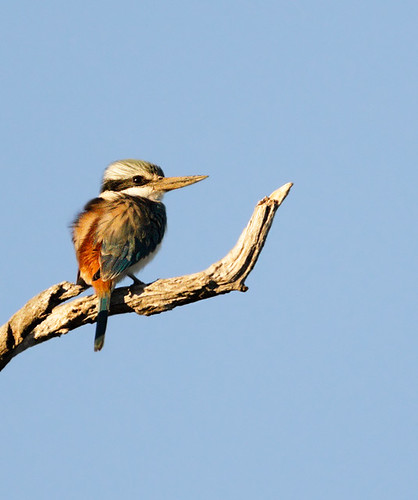
    Hi Peter. Regardless of the technical legality of picking up roadkill I do it regularly and NT museums have generally been the beneficiaries. I keep a ‘roadkill kit’ in my vehicle specifically for this- ziplock bags,latex gloves,sani-gel,a knife for beheading bigger specimens all in a zipup coles frozen food bag. When recording details the location is probably the most important thing- provenance is vital in curating specimen collections. If museums are not interested in you find then try your local park service-they sometimes need skulls etc for educational use. Mark Carter

    ============================== To unsubscribe from this mailing list, send the message: unsubscribe (in the body of the message, with no Subject line) to: birding-aus-request@vicnet.net.au

    http://birding-aus.org ==============================

  • Sydney pelagic, 12 June, 2010, with links to prion and other pictures

    Hi all,

    Here is the latest update to the report:

    Sydney pelagic, 12 June, 2010

    Weather conditions: Wind SW, swell S; Water temp off shelf 18.4 deg C. Shelf position about 6NM north of the sea mount

    1. Wilson’s Storm-Petrel: 1 (over the slick at the shelf) 2. White-faced Storm-Petrel: 1 (over the slick at the shelf; [seen only by one observer]) 3. Gibson’s (Wandering) Albatross: 1 4. Black-browed Albatross: common 5. Campbell (Black-browed) Albatross: common 6. Shy/White-capped Albatross: present 7. Indian Yellow-nosed Albatross: present 8. Buller’s Albatross: 2+ 9. Northern Giant-Petrel: 2+ 10. Cape Petrel (New Zealand ssp. australe): 2 11. ANTARCTIC PRION: common at the shelf 12. SLENDER-BILLED PRION: present at the shelf 13. Fairy Prion: less common and closer to shore than Antarctic 14. Short-tailed Shearwater: 2 15. Fluttering Shearwater: present 16. Great-winged Petrel (macroptera): 4 17. Providence Petrel: 2 18. Australasian Gannet: present 19. Pied Cormorant: 2 (in the harbour) 20. Brown Skua: 4 21. White-fronted Tern: 1 juv. 22. Crested Tern: present 23. Silver Gull: common

    Mammals: 1. Humpback Whale: 2 2. Oceanic Bottlenose Dolphin: 5

    Here is the link to some of Raja’s pictures of prions of the 12 June Sydney pelagic. Based on tail pattern, facial pattern, half-collar and M intensity, we tried to identify and to put them into their subfolders accordingly. Bill shape was a difficult task. At least we are quite confident that there were no typical Broad-billed Prions and no typical Fulmar Prions out there. Some of the Antarctic Prions look heavy-billed and therefore may be Salvin’s. Slender-billed Prion indeed is not an easy bird to identify. Therefore there may be some errors in our ID suggestions.The last subfolder “All Prions – chronological” contains all selected pictures again – but un-identified and in chronological order. You may have a look at this folder first and try to get to your own unbiased conclusion. Comments welcome!

    http://www.adarman.com/Trips/Prions-ID

    Further, there are some more pics of Black-browed, Campbell, Shy/White-capped and Buller’s Albatrosses, Northern Giant, Cape, Great-winged and Providence Petrels and White-fronted Tern. There is an interesting young Shy-type Albatross in the series. Its small size, slender bill and “innocent” face made us first think of young Buller’s.

    http://www.adarman.com/Trips/Sydney-June-12-2010/12549996_8MfE9#910904791_KLcuS

    Cheers,

    Nikolas

    —————- Nikolas Haass nhaass@yahoo.com Sydney, NSW

    ============================== To unsubscribe from this mailing list, send the message: unsubscribe (in the body of the message, with no Subject line) to: birding-aus-request@vicnet.net.au

    http://birding-aus.org ==============================

  • Loss of rare bird species fuelling pressure to downgrade National Park in India

    see http://news.bbc.co.uk/2/hi/world/south_asia/10221681.stm

    [There are a few protected areas in Australia that were established on the basis of the presence of endangered species] ===============================

    To unsubscribe from this mailing list, send the message: unsubscribe (in the body of the message, with no Subject line) to: birding-aus-request@vicnet.net.au

    http://birding-aus.org ===============================