Birdpedia – Australia – Weekly Digest

The following is a digest of Sightings Reported on Birdpedia for the period Monday, June 27, 2022 to Sunday, July 3, 2022:

Area: SA

Location: Bool Lagoon Naracoorte

Flame Robin (Petroica phoenicea) (1) Flame Robin male and female birds foraging on the ground on the track leading down to Hacks Lagoon.

Reported by: Winston Syson on Tuesday, June 28, 2022

———————————————

Need more information about a sighting? Login and contact the poster directly.

Receive sightings via email or SMS immediately they are posted.

Not a member of Birdpedia? Membership is free and gives you access to information for over 230 countries.

To sign up go to the Birdpedia Web Site (www.birdpedia.com/).

To find out more about Birdpedia and what it can do for you, see ‘What is Birdpedia?’

———————————————

IMPORTANT NOTICE: This e-mail message is intended to be received only by persons entitled to receive the confidential information it may contain. E-mail messages to clients of Birdpedia may contain information that is confidential and legally privileged. Please do not read, copy, forward, or store this message unless you are an intended recipient of it. If you have received this message in error, please forward it to the sender and delete it completely from your computer system.


Birding-Aus mailing list

Birding-Aus@birding-aus.org

To change settings or unsubscribe visit:

birding-aus.org/mailman/listinfo/birding-aus_birding-aus.org
Ravens nest-building

Hi all,

I always assumed Ravens (and other stick-builders) just used twigs/branches they found lying around.

This morning I watched an Australian Raven making repeated trips to a jacaranda and breaking off twigs/small branches for use in it’s nest in a nearby gum tree.

It also visited a dead cheesetree for more material.

From the snapping sounds, it seems all the jacaranda branches/twigs were dead/dry, but the tree itself is alive and kicking.


Regards,

Paul.

Como (34S, 151E)

Habitats of Australia-help wanted with maps (kind of advertisment, but not really)

Hi Everyone,

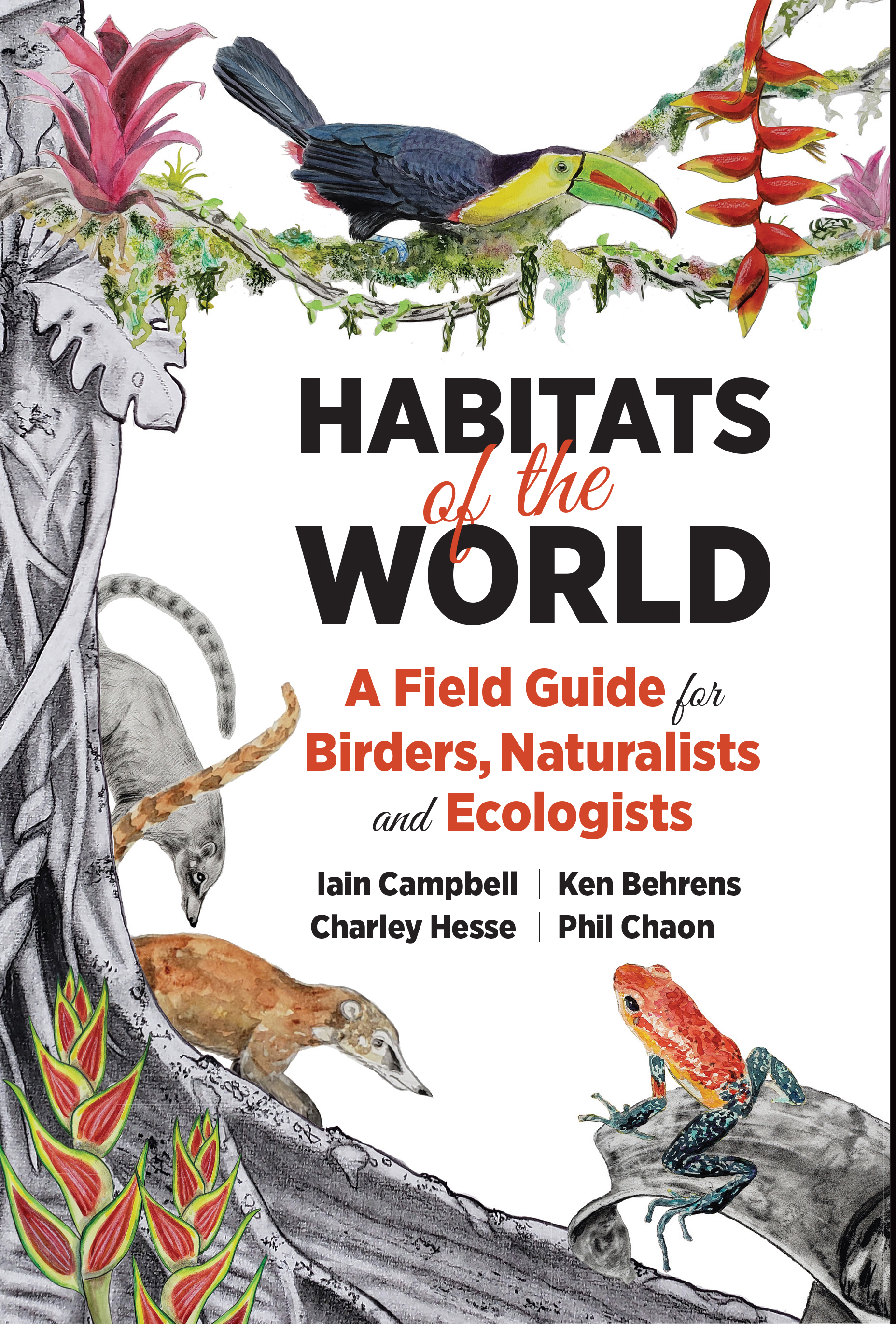
Seven long months after it was released in the USA and UK, the Habitats of the World: A Field Guide for Birders, Naturalists and Ecologists is now available in Australia. I am now working with a bunch of people around the world to make one for each continent.

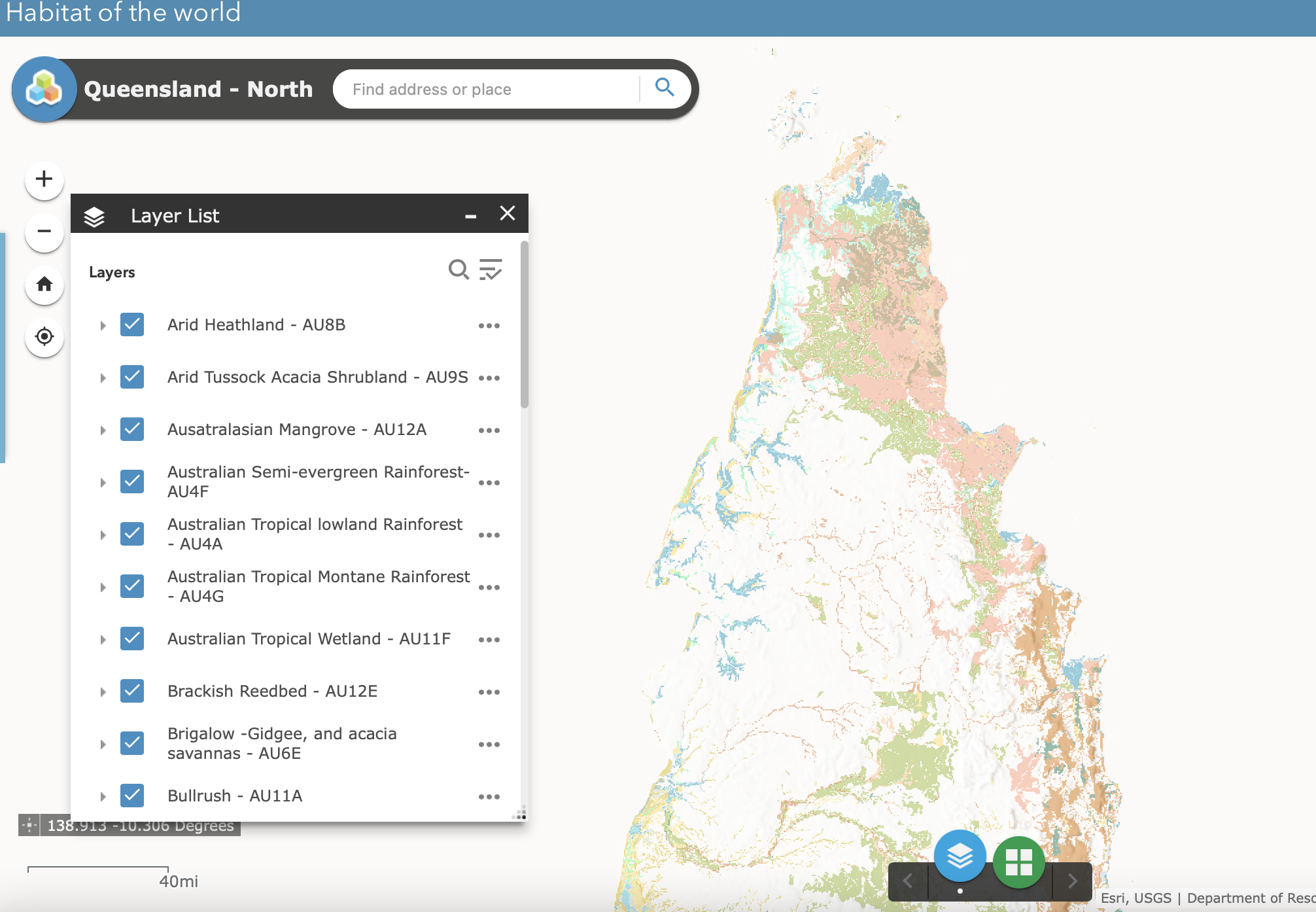
Phil Gregory and I are working of Habitats of Australia. As well as the book, we wil have the first pass mapping done which will work as a very simple (absolutely free to all) app on phones and laptops. I would like some people to look at the mapping to see if the classifications make sense- We may have maped some area as Open Eucalypt Savanna in a region that  clearly has a spinifex groundcover (Think Carpentarian Grasswren), so should be classified as Spinifex Eucalypt Savanna.
Can anyone who is interested drop me a line. I am keen to have other guides play with this as well as novice birders, because we need to make it both useful to experienced birders, but accessible to beginner birders. One thing though; this is a beta version and I am making it in Ecuador, so don't worry about spelling mistakes and text errors.

Habitats book cover.jpg
Screen Shot 2022-06-23 at 11.52.42 AM.png

 
Iain Campbell
Tropical Birding Tours
www.tropicalbirding.com

Last minute vacancy on Top End NT birding tour Aug ’22 (advertisement)

Hi all,
Even though it's still a couple of months away, a last-minute vacancy for 1 person, or 2 people sharing a room, has arisen
on our 7-day "Best of Top End birding tour", commencing in Darwin on 28 August 2022. We will be looking for the sought-after Gouldian finch, the rare Hooded Parrot, the localised Chestnut-quilled Rock Pigeon, the stunning Rainbow Pitta & many, many more good local specialties. Take advantage of current flight specials to get to Darwin.
More info on:
Please enquire by return email. 
Best regards,
Peter
———
Peter Waanders
Bellbird Birding, Wildlife & Photo Tours / Australian Birding Store
———
t:1800-BIRDING (free from landlines in Australia)  or +61 402 738 855
(our
office is staffed most, but not all, weekdays. If your phone call is
urgent please phone Peter Waanders on +61 409 763 172)a:PO Box 2008
BERRI SA 5343

FW: Spring has sprung!


From: Wim Vader <wjm.vader@gmail.com&gt;
Sent: tirsdag 7. juni 2022 13:10
To: Willem Jan Marinus Vader <wim.vader@uit.no&gt;
Subject: Spring has sprung!


Spring has sprung in Tromsø


When my daughter Marit and I returned from our long weekend on Svalbard last Tuesday, Tromsø looked completely changed: the sun shone from a cloud free sky (24 hrs a day!), and all the birches, the dominant trees here, were suddenly and completely green. Lots of flowers now also: marshy places—of which we have a lot– are yellow with Marsh Marigold Caltha, and many places my favourite spring flowers, the yellow violets Viola biflora, twinkle. The Coltsfoot are gone by now, and the Dandelions have taken over in town. (All flowers from sunny places in early spring are yellow; why?. Those in the forest are white.)


A walk around the now completely ice-free Prestvannet shows further evidence that spring has really arrived: many pairs of Red-throated Loons are displaying (10 pairs nested on the small lake last summer!), and scores of Sand Martins (Bank Swallows), our common Swallow here north, hunt low over the water. Also the first Arctic Terns of the year have returned to their colony here, which they share with lots of Common Gulls.


At the Tisnes wetland too there are Sand Martins galore, but here a few pairs of Barn Swallows are mixed in; they nest in a local barn. The Ruffs are lekking, Greylag Geese, Redshanks, Curlews and Oystercatchers are on territories, but a lone Green Sandpiper looks somewhat out of place; they nest, very sparingly, in the inland here. And the whole wetland is yellow with Caltha. A single pair of Lapwings, there used to be several here.


Of course the beautiful summer weather did not last; it never does here. Today we have 6*C, rain and wind. But spring cannot be stopped now. Marit heard a Cuckoo call, and I found several Snipe at the Rakfjord marshes yesterday, while one of the usually resident pair of Whooper Swans had returned to what I call Swan Lake. One pair of Arctic Skuas (Parasitic Jaegers); again, there used to be several here. Strangely enough, I did not find a single Meadow Pipit, usually a common bird here and on Tisnes.


And the first summer flowers are in flower: lots of Cloudberries Rubus chamaemorus,  Bog Rosemary Andromeda, and  Bearberry Arctostaphylos on the heath,  Lotus, Cornus and Trientalis along the road verges. While Whimbrels larm and Willow Grouse cackle.


In our garden the house Common Gull nests on top of the rabbit house, while Fieldfares forage on the lawn, and Grey Herons cross overhead on the way to their nests in a quiet corner of Folkeparken. And the Willow Warbler is once more the dominant voice in Folkeparken. In spring, there is no place like Tromsø! Forgive me the surfeit of reports these months; I’ll soon fall silent again.

Wim Vader, Tromsø, Norway


From Birding-Aus

There are four categories of bird found in Australia (mainland and Tas):

1. Vagrants; these are birds from outside the region and are found in ones and twos or small numbers and not regularly, they do not breed.
2. Winter visitors from northern hemisphere, mainly waders; these come here in our summer during the northern winter and do not breed. Some individuals may overwinter.
3. Summer breeding visitors; birds which arrive in Australia from the north to breed in summer. As far as I know there are only two species that arrive to breed and then leave Australia entirely in the winter (Papuan Pitta and Black-winged Monarch). Many species arrive in the south to breed, then fly north in the winter after breeding, but some individuals in these species remain in northern Australia over the winter (even though many individuals of the same spp travel to PNG). So these will also be resident.
4. Residents; breed in Australia, stay in Australia the whole year (with or without local movements).
So, to get the number of residents, get the Birdlife Australia list for the mainland and Tasmania, knock off all vagrants, winter visitors, and the Papuan Pitta and Black-winged Monarch, and all the rest are resident.

John Leonard
Canberra
Australia
www.jleonard.net

Make nature great again.

FW: Long weekend at 78*N

Well today was colder in GLoucester than in Tromso. 12 c at midday and a cold wind off the snow in Barrington Tops. We’re having an early taste of winter and this chill is said to last a week. 
I much enjoyed your trip to Svalbard. It’s thousands of birds preparing to breed. So different to here. The seasonal changes in Europe are so extreme compared to here. 
Today we were working in one of our local parks weeding and planting on the Gloucester River banks all dressed up for the cold. We’ve had two big floods this February and March, which caused much damage to vegetation and erosion along our river, and then constant rain since so weeds have grown out of all proportion. 
Today we cleared and planted a few extra trees and lots of lomandra, a tough clumping grass that helps to prevent erosion. The cold wind kept the birds quiet except for magpies and pied currawongs carolling and a family of Superb Fairy wrens that moved in to enjoy the insects we had deprived of cover. 
All best Wim. I always enjoy your far north epistles. 
Penny Brockman
On Wed, 1 Jun 2022, at 8:27 PM, Willem Jan Marinus Vader via Birding-Aus wrote:


From: Wim Vader <wjm.vader@gmail.com&gt;
Sent: mandag 30. mai 2022 22:01
To: Willem Jan Marinus Vader <wim.vader@uit.no&gt;
Subject: Long weekend at 78*N


Long weekend at 78*N

Longyearbyen on Svalbard is, at 78*N, the northernmost township in the world. It started out as a coal mining town, but that era is now almost ended, and science and tourism are the main occupations. My elder daughter, a molecular biologist, has already in many years  worked at UNIS, the university dependance here, while her husband works at the satellite station. I was here a long weekend for a family celebration, and Anna kindly drove us around on the limited road net around the town (c 2500 inhabitants). Very early spring here as yet, but during the four days we were there the grasses became clearly greener, and in the valley of Endalen, known for its rich flora (Many patches of Dryas with last year’s fruits), we found several flowering Saxifraga oppositifolia, the first flowers of the year.


Early spring here too, with meltwater running and standing everywhere, and patches of rotting snow. We were extremely lucky with the weather: sunny and clear, little wind and up to +6*C. Of course daylight and sun 24hrs a day. Everywhere, both in town and outside, one hears the pleasant jingles of the Snow Buntings, the only passerine on Svalbard. They often sing from the rooftops or lamp posts, and may nest among the innumerable snow scooters summering everywhere. They really add a lot to the atmosphere in summer


The other ubiquitous birds are the Common Eiders on the shore and on the fjord, and the many many pairs of Barnacle Geese everywhere, from the wet meadows in town to high up in the mountains; I have the impression there are more than ever now. They are very tame, as many birds are here, and also the rolypoly Svalbard reindeer, that may even fall asleep in the middle of town.  Grazing reindeer are a common sight wherever one goes, and they are not afraid of steep slopes. There are also many Pink-footed Geese around , and along the shore even some pairs of Brent Geese; but these latter will move still further north to nest.


The Common Gulls in Longyearbyen are the Kittiwake and the Glaucous Gull; the also very common Arctic Terns have not yet arrived. Along the broad Adventfjorden there is a long flattish area of saltmarsh and swampy marshland. Here are also the drinking water reservoirs for the town, still largely covered by rotting ice. One of the larger pools in Adventsdalen contained a trio of the spectacular King Eiders, as well as a pair of Long-tailed  Ducks, and a single drake Teal, the latter an uncommon bird here. The same series of pools also held Red-throated Loons and the northern species of phalaropes– I always get confused with the English and US names of these 2 species, and I have no books here.  On the last day we also saw a single male of the other species of phalarope, a relative newcomer to Svalbard. The common shorebird here is the Purple Sandpiper, but we also found a Dunlin in the wet tundra, and a few Ringed Plovers on drier hills.


The most spectacular seabirds are the Little Auks (Dovekies), that nest in vast colonies on stony hillsides, where they swarm like starlings, and keep up a continuous purring sound. They are numerous around Longyearbyen. The other common auk is the Black Guillemot, that to my surprise seemed to establish territories at least 15m up in a steep cliffwall well inwards from the main coastal road. (To see murres or puffins, you need to get out to sea). But Black Guillemots are common also close to the shore, while Fulmars sail along the shore at certain points.


Finally there is the one bird species, that stays at 78* year long, the large and round Svalbard Ptarmigan, most often found quite high on the hillsides–but one sat incongruously on a house roof. We can watch them from Anna’s house, on the neighbouring hillsides, but again one on a roof. What they search for there?

There are not all that many different birds on Svalbard, but they are quite special, and of course the landscape here is utterly spectacular, and truly one of a kind.

Wim Vader, Tromsø, Norway

PS on return to Tromsø yesterday evening everything there had suddenly turned green, and the temp. stood at 20*C!


<HR>
<BR> Birding-Aus mailing list
<BR> To change settings or unsubscribe visit:
</HR>

Australian birds – numbers

Hi all,

I had a few questions regarding the number of bird species in Australia.

How many bird species have been sighted in mainland Australia and Tasmania (but excluding islands / territories like Christmas Island, Norfolk Island and Heard Island, etc.).

How many bird species are resident in Australia?

Is a bird considered a resident even if they visit for a few months (e.g. Papuan pitta).

How many bird species are there in Australia excluding vagrants (that have only been seen once or a few times such as Eurasian hoopoe last sighted in Broome in 2015).

Would love to hear everyone’s thoughts.

Warm regards,

Charlie Hunter
Bronte, NSW


Birding-Aus mailing list

Birding-Aus@birding-aus.org

To change settings or unsubscribe visit:

birding-aus.org/mailman/listinfo/birding-aus_birding-aus.org
Massive Numbers of Black Swan at Lake George in SA

Morning all

I get a thrill out of seeing large congregations of birds in one area so a visit to Lake George in South Australia at the moment would see massive numbers of Black Swan that were there during a recent visit (end of May 22). Good time for a visit… apart from the cold windy weather…

Don’t bother with Bool Lagoon… bone dry at the moment.


Chris Shaw
seashore@internode.on.net
+61 409 675912

www.ararelitus.com

After the game, the King and the Pawn go into the same box.  – Italian proverb